Hawthorn and the Philosophy of Ketchup

I made hawthorn ketchup yesterday, which is not a sentence I ever expected to write.
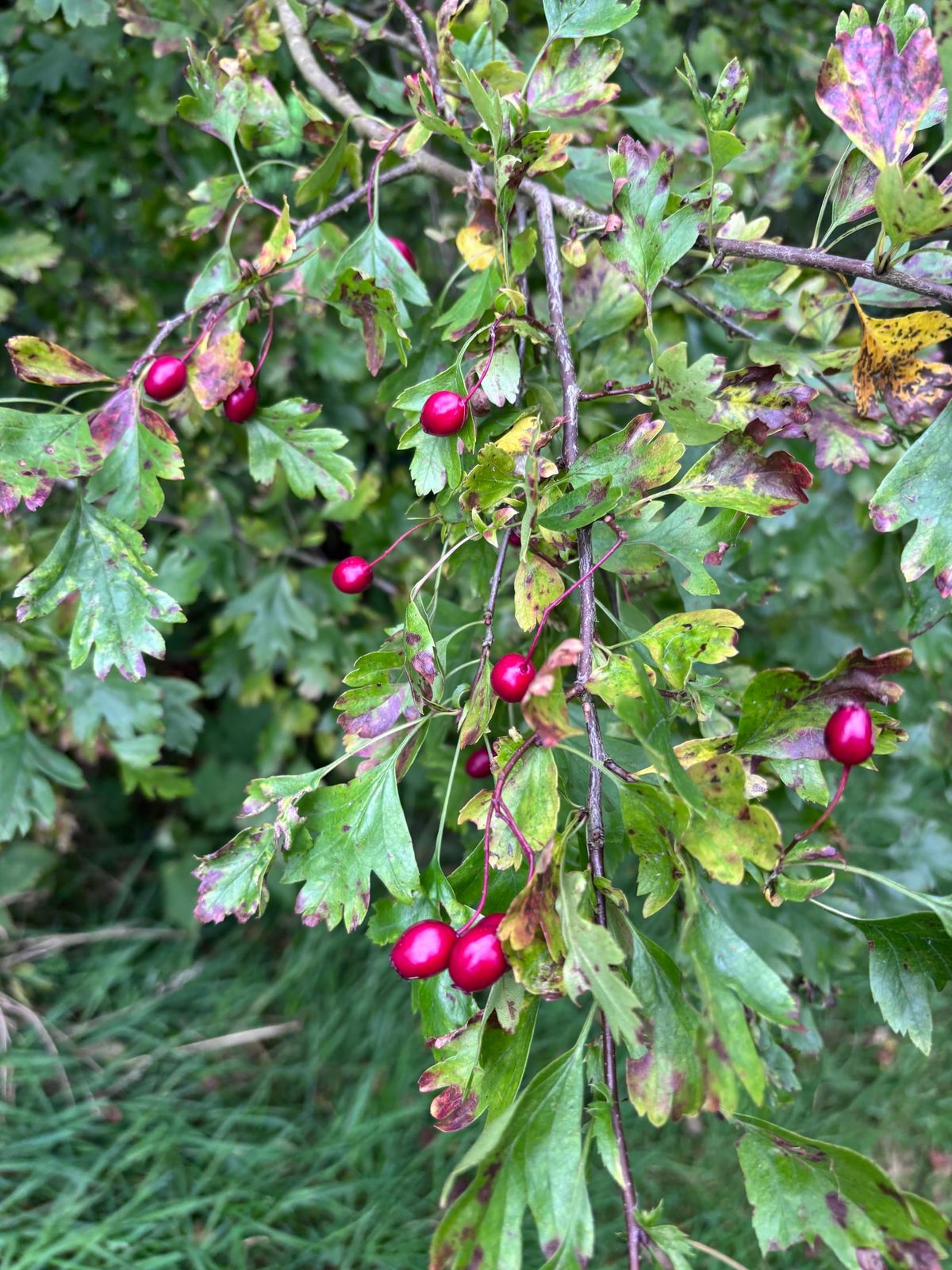
Hawthorn is one of those plants that is so familiar that it is easy to stop seeing it. It is a hedge, thorny, white blossomed in May and small, elongated red berries in autumn. It is somewhere for birds to disappear into. Ordinary, maybe. Although ordinary was only ever a failure to look closely enough.
Hawthorn is far from ordinary. Some might say extraordinary, once the folklore enters the room.
The May tree has been tangled up with human imagination for centuries. Its blossom was gathered for May Day garlands and associated with fertility and the turning of spring into summer. It appears in the traditions of the May Queen and the Green Man. In Celtic folklore it became associated with fairies, magic and protection.
And for heaven’s sake, don’t bring the blossom indoors. That was supposed to invite illness or death into the house.
There might even be something physical lurking beneath that particular superstition. Hawthorn blossom contains trimethylamine, a compound also produced in decaying animal tissue. Apparently the scent reminded people in medieval times of death and the Great Plague.
Imagine being simultaneously associated with fertility, fairies, death and May Day. And I thought I contained contradictions.
Hawthorn has another life, too. Its young spring leaves were traditionally eaten and became known in some places as “bread and cheese”. The flowers, leaves and berries have a long history in herbal medicine, particularly in preparations associated with the heart. Hawthorn leaf and flower still have recognised traditional herbal uses today, including preparations used for temporary nervous heart complaints such as palpitations, once serious causes have been excluded, and for mild stress and sleep difficulties.
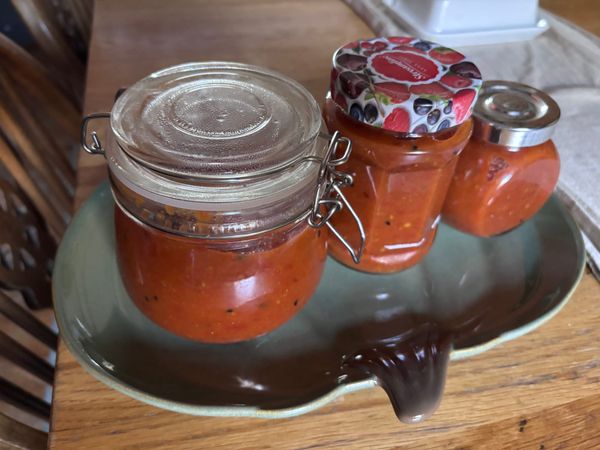
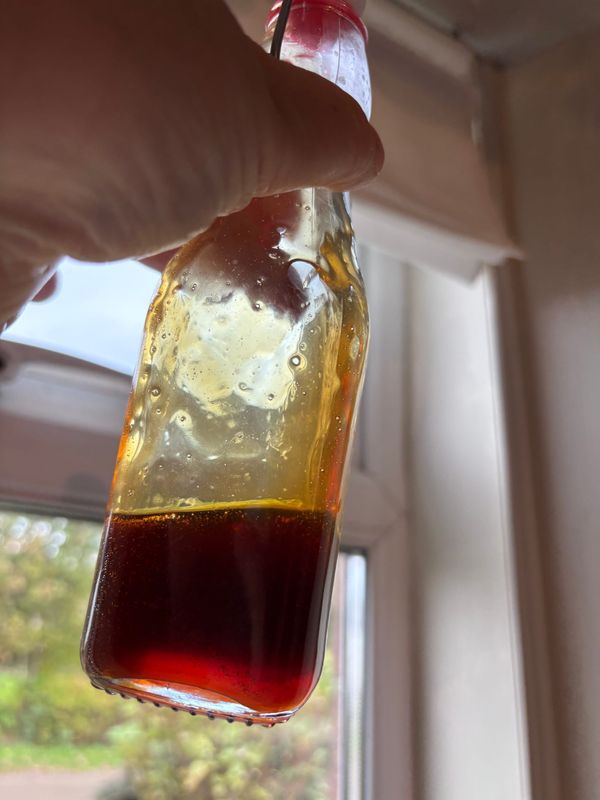
Then there are the haws. Mine transformed into ketchup. I cooked them, pushed the resulting pulp through a sieve and weighed it, added cider vinegar, brown sugar, ginger, garlic, black pepper and chilli. I simmered it down to a thick and glossy ketchup consistency. Eventually I had a tiny bottle of something dark and russet-coloured and rather beautiful.
I tasted it from a spoon. Woah! Too spicy. I had overdone it. That half teaspoon of chilli flakes was a bit much. Cough.
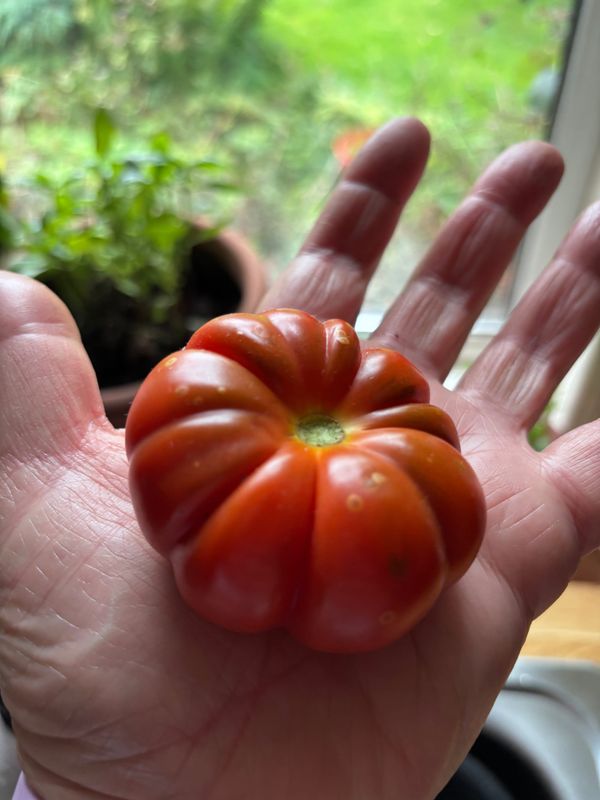
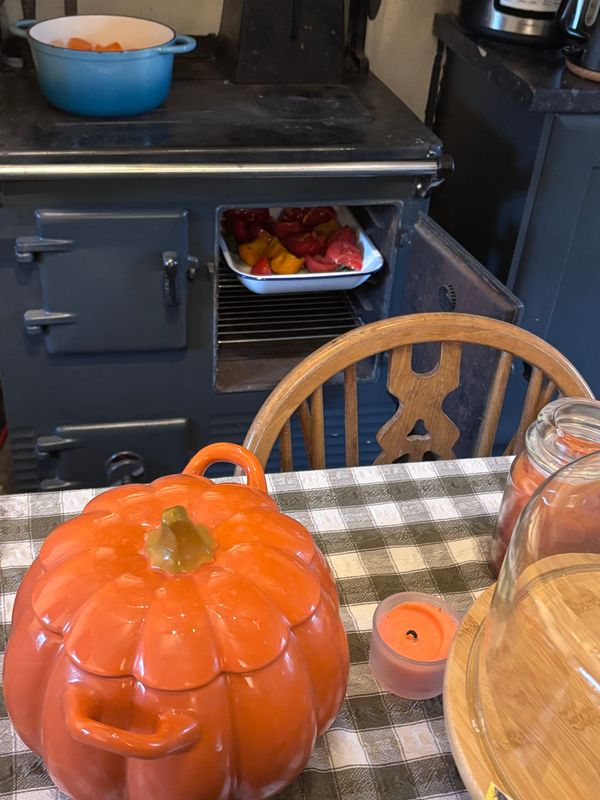
Then I roasted a small pumpkin until its flesh was soft and sweet, opened it up and filled it with leftover cauliflower cheese. I added more cheese, because there are few situations involving cauliflower cheese that cannot withstand more cheese, and put it back into the oven. We ate it with the hawthorn ketchup. Wow. It was exactly right.
The heat that had seemed excessive from the spoon cut through the rich cheese and the sweetness of the pumpkin. Something I had judged as slightly wrong turned out to make perfect sense in the right environment.
I’ve been thinking about that ever since.
For a long time, ideas about personality emphasised stability. When I was younger, I remember absorbing the idea that personality was essentially established very early in life. You became whoever you were going to be and then, more or less, that was you. The research has become much more interesting since.
Personality has stability, certainly, but it can also change throughout adulthood. There is now research into deliberate personality change, including the possibility that repeatedly practising behaviours associated with the person we would like to become can, over time, contribute to measurable changes in our traits.
Wanting to change isn’t magic. Apparently you have to do something about it. Annoying, really. But also rather wonderful.
I encountered another version of this during my years working in community arts, arts and dementia projects and care management. Again and again I heard people say:
“I’m no good at art.”
Usually what they meant was that at some point, often a very long time ago, they had discovered that they couldn’t draw or paint in the particular way they believed artistic people were supposed to draw or paint. An early experience had become a permanent fact about themselves.
Looking at art in different ways sometimes loosened that certainty. Art doesn’t have to mean producing a masterpiece in oils. It can be music and dance and movement. It can be shaping something in your hands, arranging a room, designing clothes, cooking, choosing colour, responding to texture, making something abstract or simply expressing something for which you don’t have satisfactory words.
Sometimes the thing that needs to change is the definition. I’ve done it to myself too. At school I decided I was terrible at geography and history. I despised both classes. And here I am. I’ve travelled widely. I’ve lived in Scotland and in several counties of England. I write about folklore and historic food. Show me a fifteenth-century house and I am practically pressed against the window wondering what’s behind the panelling.
Maybe I was never as uninterested in history or geography as I thought. Maybe I had encountered them in forms that didn’t speak to me yet. We can mistake an early experience of something for a permanent fact about ourselves and maybe we do the same thing with our personalities.
I’m shy. I’m bad with people. I can’t learn languages. I’m not creative. I always give up. I’m just like that. We become accustomed to our own description of ourselves.
That thought has particular resonance for me after working in the field of substance misuse, where descriptions of people can become terribly powerful. Behaviour becomes identity surprisingly easily, especially when other people begin using the same language. Yet a human life is hopefully very long.
We acquire knowledge. We practise things, meet people, travel. We love people and lose people. We make spectacular errors of judgement. We find ourselves in circumstances we couldn’t have imagined and discover abilities we had no reason to know we possessed. We change.
And sometimes, it might be that something was there all along and just needed different circumstances in which to emerge. Which brings me back to the hawthorn.
Imagine spending your whole life thinking you’re a berry. You grow on a hedgerow. Birds eat you. Winter comes. That’s the deal. Except one autumn somebody picks you, carries you into a kitchen, cooks you down, pushes you through a sieve and adds vinegar, ginger, garlic, brown sugar and chilli. Suddenly you’re ketchup. And, stranger still, it turns out you are exceptionally good with cauliflower cheese stuffed into a pumpkin. I like that.
I like the possibility that our present understanding of ourselves may be incomplete. That there may still be transformations available to us at fifty, seventy or ninety. That curiosity itself might alter the boundaries a little. That doing something badly can eventually become doing it adequately, then comfortably, perhaps even well. That the description we have carried since childhood doesn’t have to be the final edition.
Maybe it will even stop me lying awake occasionally and berating myself for something I said or did in 1985 or 1993. After all, that person has had an awful lot of cooking since then. Maybe.
Further Reading : https://www.eatweeds.co.uk/hawthorn-crataegus-monogyna Eat Weeds accessed 7th October 2026
https://www.ema.europa.eu/en/medicines/herbal/crataegi-folium-cum-flore European Medicines Agency accessed 7th October 2026
https://dartmoorpreservation.co.uk/plant-of-the-month-hawthorn/ Dartmoor Preservation Association accessed 7th October 2026
 Amanda J. Wright