What am I Doing?

This week, I received a message from a woman I know in America. It was a lovely, personal message, telling me how much she valued what I was doing. I was very touched by it.
Afterwards, I found myself wondering what, exactly, I am doing. It’s a reasonable question, and one I’ve been thinking about quite a lot.
I’m writing a book called Fieldwork of Home. I’m also writing essays for Outwith. I’m researching local food traditions, experimenting with recipes and trying to learn something about the place where I live.
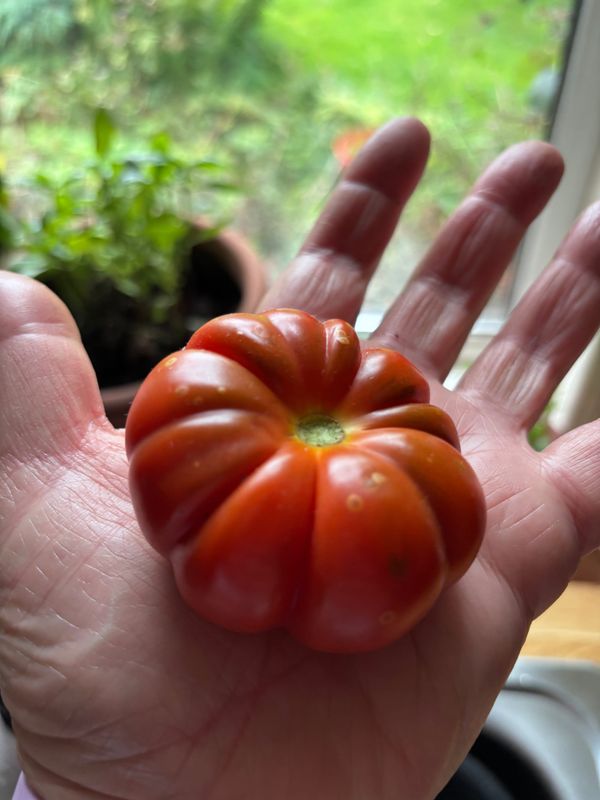
I’m growing food, preserving it, sharing with my neighbours, giving it away and running a little free shop. I’m interested in local food security and how people can make better use of what’s available around them.
I’m philosophising rather a lot. I’m trying to be a good neighbour, wife and friend, while also being a good daughter, mother and grandmother to people who live a long way away.
I’m learning to inhabit this place and this life well. I think that’s probably the simplest way of describing it.
When we arrived here, I inherited a garden that had been established by other people over many years. There were mature trees, fruit bushes, perennial vegetables and plants whose identities I didn’t yet know.
I decided to spend the first year watching what emerged before making too many changes. This has required considerable restraint. I’m quite capable of charging into a garden with a pair of secateurs and a plan, but I wanted to understand what was already here.
It has been an extraordinary year. The first great discovery was wild garlic, growing in quantities I’d never encountered before. I’d always treated wild garlic as something precious, gathering a little while out walking and being careful not to take too much but suddenly, I had more than I knew what to do with.
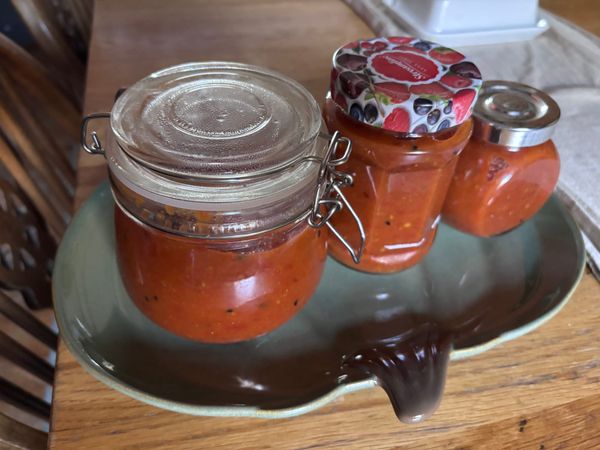
I made pesto, cooked with it, preserved it and tried to find ways of keeping it for later in the year. Then came sweet cicely, ground elder, rhubarb, gooseberries, raspberries, blackcurrants, cherries, apples and plums.
The rhubarb alone amounted to about twenty-five kilos. The gooseberries brought on what I can only describe as Gooseberryageddon.
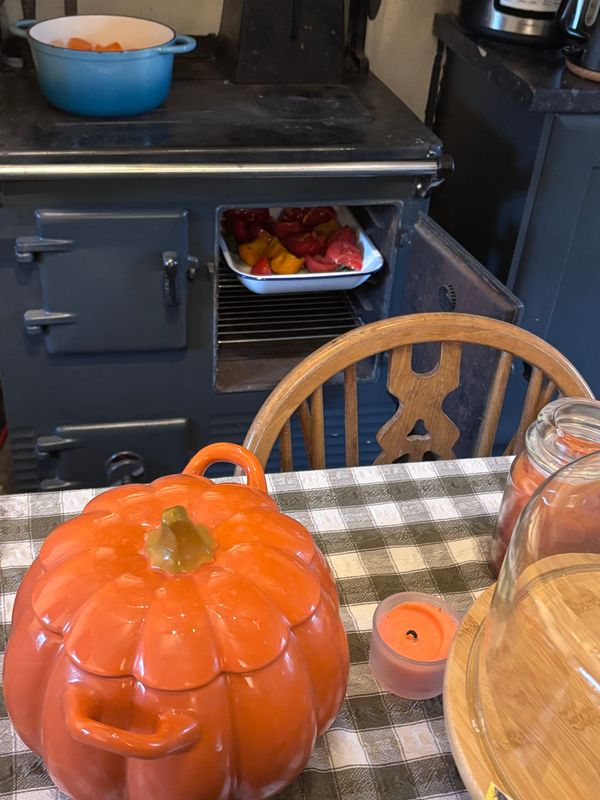
I spent much of the summer picking, processing, cooking and preserving. At times, it felt as though the garden was setting my daily schedule. The raspberries needed picking every day, and there was always something else ripening while I was occupied with the last thing. The Gamrie Gardens team came to help with some of the harvesting, for which I was enormously grateful.
I started giving produce to neighbours and eventually opened a little free shop, where people could take what they needed. It was a practical response to the quantities of food coming out of the garden, but it also connected with something I’ve been interested in for years: how communities share resources, support one another and make use of the things available to them.
I’ve spent much of my working life in care, community development, the arts, education and public services. There were years of considerable responsibility, particularly when working with vulnerable people and matters involving advocacy and human rights.
I’m still thinking about those experiences. There are things I learned that I want to carry forward, although I’m not entirely sure yet what form that will take.
Running a free shop is a much smaller undertaking than some of the work I’ve done in the past, but I recognise familiar concerns in it. How do we make something useful available to other people? How do we remove unnecessary barriers? How do we help people feel that they belong to a community? And what can we do with the resources we already have?
As the summer progressed, I began to notice something interesting. People were happy to take some of the produce, but by autumn the windfall apples were attracting very little interest. I wondered why. Perhaps people didn’t have the time to process them. Perhaps they didn’t know what to do with imperfect fruit, or perhaps they simply had enough apples already.
I couldn’t help thinking about the distance between the food growing around us and the food we’re accustomed to buying. Supermarkets have made an extraordinary range of produce available throughout the year. They have also shaped our expectations of what food should look like and how much work we should have to do before eating it.
I’m enormously grateful for the convenience of modern life. I don’t think we should romanticise the labour involved in feeding a household in the past. But I do wonder what knowledge has been lost as we’ve become less involved in preparing food from its earliest stages.
That question has led me into some enjoyable experiments. I’ve been reading early nineteenth-century accounts of life in Aberdeenshire, particularly descriptions of locally grown grains and the foods made from them.
Oats and barley were fundamental to the traditional diet here. Before potatoes became widespread, grain-based foods occupied an even more central place in Scottish households. Oatmeal could be made into porridge, brose, bannocks and other dishes, while whole or coarsely processed grains were used in ways that are much less familiar today. I want to understand some of those foods by making them.
What happens when you grind locally grown grain yourself? What does an old-fashioned oat groat pudding taste like? How did people manage with the ingredients and equipment available to them? I’m interested in the practical experience of it.
And I’m very aware of the luxury of approaching these things through curiosity rather than necessity. I can spend an afternoon trying to recreate a historical dish, then put the dishwasher on and go to bed.
The woman who made that same dish two hundred years ago might have spent much of her day preparing food, tending a fire, carrying water and managing all the other work required to keep a household functioning. She didn’t necessarily have the option of deciding that the experiment had become tedious and ordering a takeaway. I don’t either but only because nobody delivers take away food this far out. But you can see my point. There’s a difference that matters.
When I worked in the Hebrides, I was fortunate to spend time with older women who shared an enormous amount of practical knowledge with me. We made butter, duff, scones and bannocks. They told me about and demonstrated preparing fish, using seaweed, making crowdie and working with the foods that were available locally.
I loved listening to them talk about their lives and the things they’d learned from their parents and grandparents. One woman showed me how to split herring and mackerel using her thumbnail. There were different techniques for the two fish, and she kept her thumbnail long enough to do the job. I still think that’s remarkable. Her body had adapted to the demands of her household work. A thumbnail had become a specialised tool.
There was also a great deal of knowledge in the movements themselves, developed through years of repetition and experience. I wonder how much of that sort of knowledge disappears when the people who possess it are no longer here to demonstrate it.
Making butter was another interesting experience. Traditionally, producing butter involved a considerable amount of physical effort. I was told that children would sometimes be given turns at beating the cream, passing the work around until the butter finally came.
When I invited people to make butter with me, they were generally quite happy to participate, provided we used an electric whisk or food processor. Nobody particularly wanted to stand beating cream by hand.
And washing the butter in cold water could be painful for people with arthritis or aching joints. Sometimes I would do that part myself, with the others supervising. The process was familiar to them, and they could explain what needed to happen. The machinery simply made it easier to participate. I’ve often thought about that.
We sometimes talk about traditional skills as though preserving them requires us to reproduce every aspect of the labour involved but people have always looked for ways to make work easier. Mills, mechanical churns, improved ovens and countless household inventions were developed because human effort and time were precious. Passing a butter churn around the children was another way of distributing the work.
I’m embarrassingly fond of my own kitchen appliances. My bread maker prepares dough that I can later shape and bake in the oven. I’ve used it for the first stages of making jam. The slow cooker gently cooks onions while I do something else, and the Instant Pot pressure-cooks dried pulses far more quickly than I could manage on the stove.
My rice cooker is nothing short of magical. It has a steamer that I use for buns and gyoza, and I can leave it to get on with its work while I attend to something else. I like machinery that takes care of repetitive tasks. It gives me more freedom to explore the things that interest me.
If I had to stand over the cooker all day, I couldn’t wander into the garden and see what was growing. I couldn’t spend an afternoon researching an unfamiliar recipe, experimenting with a new ingredient or simply enjoying being outdoors. And maybe that freedom is one of the greatest benefits of the domestic technologies we now take for granted.
My grandmother would probably have appreciated it. She was an exceptionally good baker, particularly of cakes and pastry. I remember learning to make fruit cake with her when I was about six or seven. She beat butter and sugar by hand and had a formidable pair of biceps. I’ve never quite mastered that particular skill. I’m perfectly happy to let the mixer do it. But I still remember making cakes with her, and I still make fruit cake using the knowledge she passed on.
Recently, I’ve been baking with my grandchildren. I made a glorious purple iced birthday cake with my eldest granddaughter. I made bread rolls with my younger granddaughter, who was absolutely delighted by the whole experience.
She handled the dough, rolled it between her hands and shaped her little rolls. She watched them rise, went away to play, came back to help put them in the oven and waited while they baked. When they were ready, she sat eating one with butter, enjoying every mouthful. I said, “That looks like the most delicious bread.” She nodded enthusiastically, her mouth full. I found it enormously moving. She’d experienced the transformation of a few simple ingredients into something she could eat, and she’d participated in every stage. I’ve made cinnamon buns with her too, and little dog biscuits with my grandson.
I hope they remember some of these experiences when they’re older, just as I remember baking with my grandmother. But I’m also enjoying the experience myself. Watching a child discover something you’ve known how to do for decades makes it interesting all over again.
It reminds me of the pleasure I took in learning from those women in the Hebrides. They were generous with their knowledge, and I was genuinely interested in what they had to teach me. There was something deeply satisfying about the exchange.
Maybe that’s part of what I’m trying to do through Fieldwork of Home. I’m testing recipes and ideas, exploring traditional techniques and documenting what happens. I’m interested in the practical knowledge involved in making a home function well, particularly the small adaptations that save time, reduce waste or make something more enjoyable.
I’m also interested in the relationship between a household and the place in which it exists. Here, that means learning about the soil, the weather, the plants that thrive here and the foods traditionally grown and eaten in this part of Scotland. It means paying attention to the seasons and discovering how much of our food can come from the garden. It also means recognising the limits of what two people can reasonably manage.
By the end of summer, I had three freezers full of food and was still climbing into brambles to gather 200 grams of blackcurrants. I began to wonder whether I’d lost all sense of proportion. Having experienced scarcity, I find it difficult to leave useful food uncollected. There is something in me that feels compelled to make the most of every opportunity. But the garden has been teaching me something about that too.
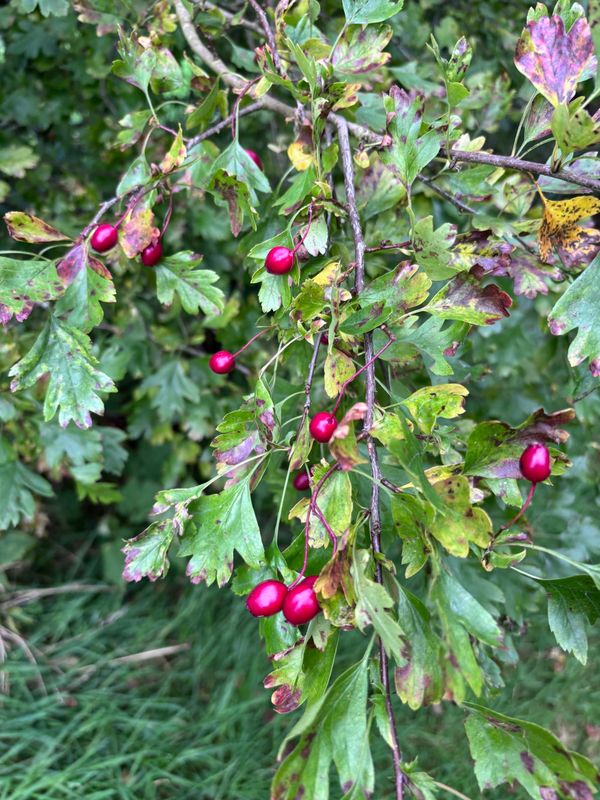
The birds ate all the cherries. Caterpillars discovered the kale. The deer helped themselves to windfall fruit. And when I forgot about the rowan berries for a week, distracted by the apples and plums, the birds took those as well. I was disappointed, but I couldn’t really begrudge them. There was enough for everyone.
I’ve also begun to question whether everything needs to be preserved. Wild garlic is wonderful in spring. Perhaps I don’t need to find ways of eating it in October. Perhaps the pleasure of seasonal food includes the anticipation of its return. These are small discoveries, but they’re changing the way I think about abundance and the responsibilities I feel towards it.
I suspect I’ll always be inclined to gather more than I need. But I’m learning. And I’m thinking about what it means to live well in a place. That’s a larger question than how to manage a garden or stock a pantry.
I’m trying to be a good neighbour, which sometimes means sharing food or lending a hand, and sometimes simply being available for a conversation. I’m trying to be a good wife and friend. I’m also trying to be a good daughter, mother and grandmother, despite living a long way from much of my family.
Distance makes some things difficult. I can’t always be there for the ordinary moments of their lives, and I miss that.
I send parcels, make and receive telephone and video calls, emails, arrange visits and try to create experiences we can share when we’re together. I don’t know whether I’m getting the balance right.
There are days when I feel that I’ve spent too much time dealing with fruit and vegetables and not enough time doing other things that matter. And there are days when a neighbour calls in, somebody takes something from the free shop, or a grandchild tells me excitedly about something they’ve made, and I feel very fortunate to have these relationships in my life.
I’ve been thinking about the idea of living well for years, in different contexts. During my working life, much of that thinking concerned other people’s opportunities, rights and wellbeing. Now I find myself considering some of the same questions in relation to my own life.
What makes a good life? What do we owe the people around us? How do we use our resources and abilities in ways that are useful? What is worth carrying forward? These are philosophical questions, but they’re also practical ones.
Sometimes the answer involves helping somebody with something difficult. Sometimes it involves sharing a bag of apples. And sometimes it involves making bread with a four-year-old.
I don’t think I’ve reached any grand conclusions. I’m still experimenting, learning and changing my mind.
I’m writing Fieldwork of Home because I want to share some of what I’m discovering, including the recipes, techniques and practical knowledge that might be useful to other people. I’m writing for Outwith because I want to think about the wider questions these experiences raise.
The two forms of writing inform one another. The practical experiments give me things to reflect on, and the reflections often send me back to the kitchen or garden with new questions.
I’m also continuing to learn from the people around me. Some of them have lived here all their lives and know things about this landscape that I couldn’t possibly discover in a single year. Others have experiences and perspectives that are entirely different from mine. I enjoy those conversations enormously. And I’m beginning to understand that inhabiting a place well takes time. You have to notice things. You have to be willing to learn. You have to make an effort to know the people who live around you. You also have to accept that you won’t get everything right. I certainly haven’t. But I’m interested in trying.
So perhaps that’s what I should have said to my American friend. I’m learning to inhabit this place well. I’m trying to understand its food, its history and its people. I’m exploring what I can contribute to the community while I’m here. I’m making things, writing things, sharing things and thinking about things. And I’m trying to be a good person to the people I love.
It seems to me that this is quite a lot to be getting on with. Although I still haven’t entirely answered the question of what I’m doing. Perhaps that’s all right.
I’m enjoying finding out.