Room, room - Mummers and Pace Eggs

I stumbled upon mumming (or mummering) while I was looking up the customs around soul cakes earlier this week. One rabbit hole led to another, as usual, and I was soon reading old play scripts, comic scraps of verse, grand entrances, exaggerated boasts and people being brought back to life by doctors with very dubious qualifications.
The play scripts originated from a wide spread of places such as Bursledon, Shetland and Paisley. The Master Mummers archive gathers older scripts and fragments from across Britain and Ireland, and makes clear how much local variation exists under the broad umbrella of folk plays. A script from one place can share lines or characters with another, while carrying its own names, jokes and turns of phrase.
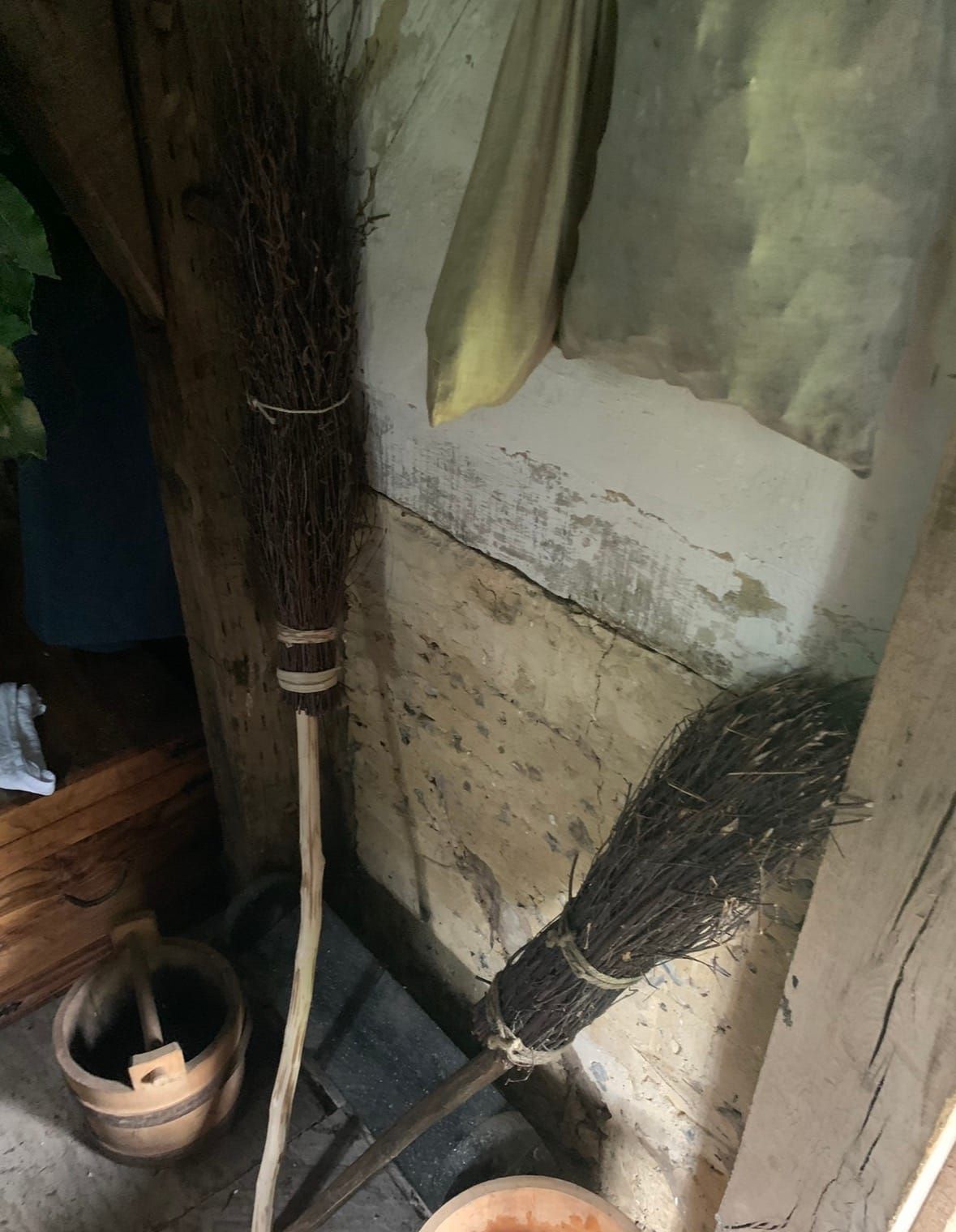
The plays are short, made to be carried from one doorstep or gathering to the next. They don’t need scenery or a venue. They need a handful of performers, an audience willing to make room, makeshift costumes and props and somebody with enough confidence to announce that the play is about to begin. In some versions, a character sweeps a circle with a broom, to make room, in others, the players mark out their space by walking or dancing it. A 1913–16 play collected from Bursledon begins with Father Christmas calling, “Room Room,” before inviting King George in to clear the way.
Then the characters arrive one by one. Their names and costumes differ between versions - kings, soldiers, challengers, fools, old Father Christmas figures, and doctors who promise cures for an surprising list of ailments, and perhaps a staggeringly extortionate fee. The costumes could be disguises assembled from whatever was to hand, or bright and deliberately odd. For Pace Eggers, the English Folk Dance and Song Society describes costumes made from colourful paper, with decorated hats and wooden swords.
There is often a fight. Someone is mortally wounded, and the doctor is summoned to revive the deceased player. The Bursledon script has its own wonderful exchange over the doctor’s fee before he gets to work. A nineteenth-century account of folk drama describes the broom-cleared space, the fights and the doctor’s cure as recurring features across several kinds of play, although no single style fits every script.
It all sounds a bit Monty Python, doesn’t it? I’m wondering if these kinds of folk plays influenced or inspired some of those sketches. It would be fun to give some of that back to a play, I think. In a full circle moment.
The Easter play has a particular name: the Pace Egg play. It shares some of the dramatic core with Christmas mumming, while belonging to the Easter custom of pace egging. In Yorkshire and Lancashire, Pace Eggers went from house to house; songs asked for eggs, and the plays developed their own characters and local traditions. Old Tosspot, the Turkish Knight and the Fool appear in some versions. The season, the egging songs and the character of the performances give the Easter plays their own style.
The endings have their own variety too. The quarrel may be settled, the revived player may rejoin the cast, the performers may sing, ask for a contribution or offer good wishes to the household. That generous little turn back towards the audience feels central to the joy of all of these plays - the performance belongs to the audience gathered around as much as to the people in costume.
Mumming, as a word, dates back to medieval times. It seems to be linked to an old French word about disguised performances. There’s a reference to a mumming visit to a young Prince Richard in 1377 but this doesn’t mean it was the full recognisable format play known as mumming more recently, since the 1770’s recorded versions involving the doctor, death and resurrection themes. It might have just meant a masked performance. The 1377 account specifies 130 masked riders with musicians and torches, arriving to invite the young prince to play dice. What a spectacle that must have been! I hope my nearest and dearest film maker doesn’t get any ideas to replicate that.
I am married to a short film maker. He, himself, is not short, being six feet tall. It is the films that are short. Since hearing about these plays, he is now planning to rope the neighbourhood in to a mummering performance in December, to entertain our neighbour, who isn’t able to travel to enjoy a play, these days. There is already talk of a fight, a doctor, Father Christmas, the garage door as a time portal and a broom making room for the whole, questionable, time-travelling company.
Pace Egg plays are typically performed around Easter, traditionally, it seems, as a playful means to ask for eggs (or food or money). Maybe that wasn’t the original intention but unfortunately, I’m unable to ask the early performers now. An early record, the archive suggests to be from 1842 but it is noted to be recorded from a memory, the pace-egg plays were already a tradition by then and could potentially have been performed between around 1800 and 1842. Pace connects with Pasch or Paschal for Easter and Pace Eggs were Easter eggs.
Easter? That may become the next instalment, if the neighbours haven’t had enough of his antics by then. The Pace Egg play seems a good companion for mumming - another brief, lively drama with old roots, scope for local variation, and an ending that sends everyone home with a little festive goodwill wish.
Further Reading:
Here’s the link to the “Beg Your Leave” song collected from Pace Eggers near Sunderland Point in 1905. Its verses introduce the company one character at a time. Page 231. Accessed 1/11/26.
mastermummers.org featuring full scripts of plays by county accessed 1/11/26
YouTube video of a mummers play from New Year’s Day 26 accessed 1/11/26
English Folk Dance and Song Society accessed 1/11/26
English Heritage on Easter traditions accessed 1/11/26
Sacred Texts If you can wade through gruesome medieval text and images associated with baiting animals, you reach the paragraph about the origins of the medieval word mumming, which relates to performing in a mask. accessed 1/11/26