Are the Boys Back?

Every year, around late August, the question around the Port of Ness begins to arise,
“Are the boys back?”
It is a simple question, but it carries more weight than the words suggest.
The boys are the Men of Ness, the guga hunters returning from Sula Sgeir, a remote rock in the North Atlantic. Uncles, brothers, fathers, out on treacherous seas. While I was living in Lewis, there always seemed to be an epic storm around late August, much as there were many records of such late August storms in archived news publications over the years.
By the time the question is asked, people often already know the answer. News travels quickly across the islands. The question is not always seeking information. It is a way of locating ourselves within the year. The season has turned, the sea has been crossed.
A familiar rhythm has repeated itself.
The question stayed with me because it surfaced in various places. I heard it in conversations in shops, in community groups, in care homes. I heard older people ask about it when many other things seemed less important.
Sometimes people wanted to eat guga, sometimes they absolutely did not. Guga is a little like Marmite - people either love it or hate it. It smells hilariously strong. It looks like it might belong in a museum - as a food prospect, it looks quite disturbing. The taste has been described as a cross between fish and lamb. And yet, whether people enjoyed eating it or not, it remained woven into the fabric of Hebridean life.
The more I pondered, I realised that this wasn’t really a story about guga. It was a story about seasonality.
A neighbour returning from a successful day’s fishing might appear with a bag of mackerel to share. Someone would be making rhubarb jam. Someone else might have sheep fleece offcuts for mulching. Seaweed would be gathered for potatoes. Bragar potatoes and dirty carrots would appear from the machair. Hand-dived scallops might arrive from local waters. A neighbour with a tractor would help bring home peats or cut grass. Somebody would cut peats for a neighbour no longer able to manage it themselves.
These things were not separate from community life. They were and still are community life. Food arrived attached to people, places and seasons. The onions came from a particular garden. The bacon came from somebody’s pigs. Rabbits and geese came from the gamekeeper. The best potatoes came from a particular stretch of machair. The mackerel arrived because somebody had a good day at sea and shared the catch.
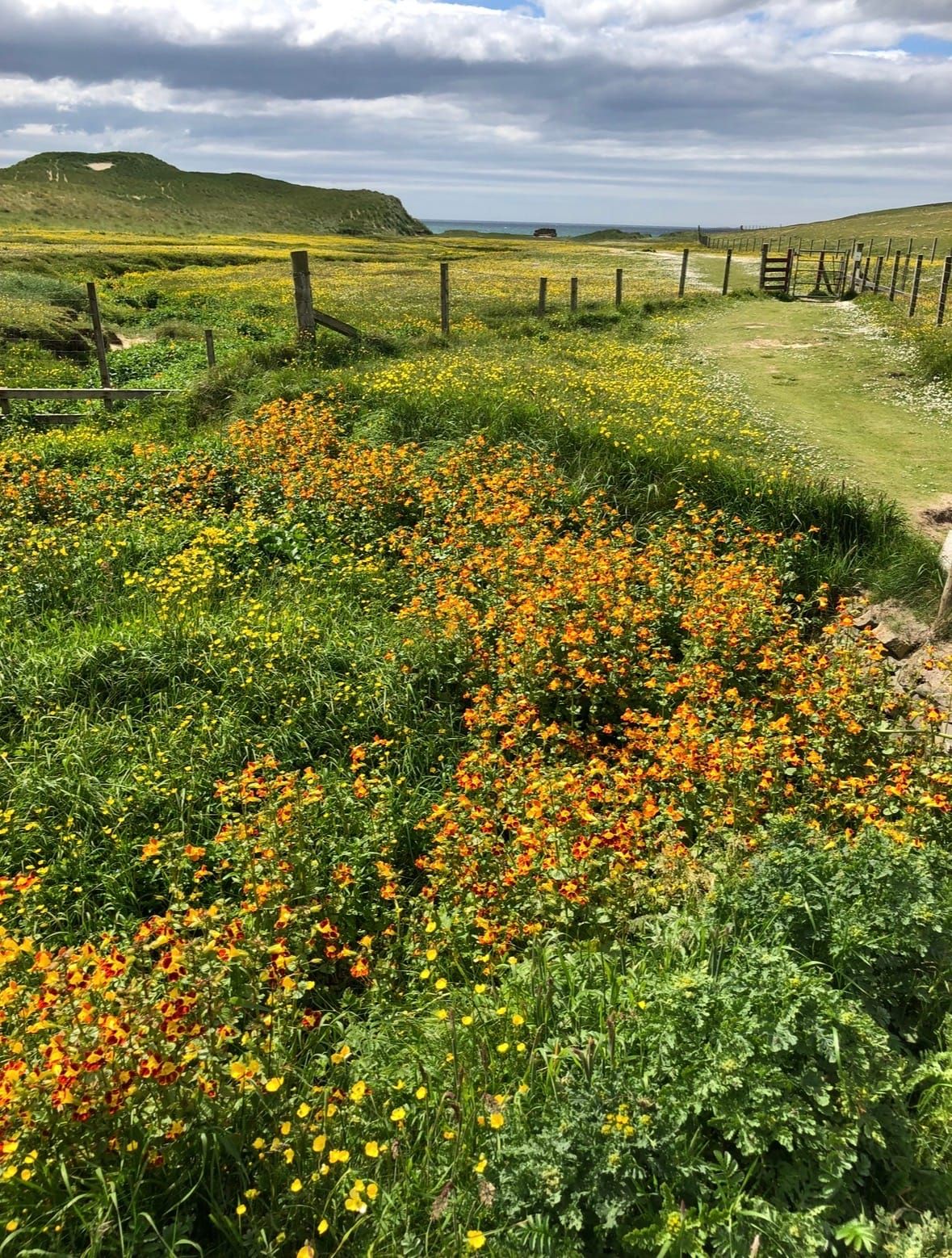
In the long summer evenings, you might hear the corncrake calling at midnight. Not everybody appreciated that. I once had one in the garden and often wished it would take the night off but its call still marked a particular moment in the year. Like the arrival of mackerel or herring, the first elderflowers, yellow flag irises, or the return of the guga hunters, it helped to locate people within the seasons of a place.
This is one reason I have found debates about guga difficult. I understand why people hold strong views and I understand concerns about animal welfare and numbers and about who decides but I think that many people from the area who discuss the hunt are discussing something larger than the bird.
I wondered about writing this piece at all, considering that it can be seen negatively to even talk about it but my intention is to uncover a perspective that I’ve been fortunate enough to see. I’m writing about the guga hunting season as a way of thinking about seasonality, cultural memory and belonging.
I am not interested in telling people what to think about guga. Farming, fishing and food production all have their own ethical complexities. The world rarely divides neatly into categories of right and wrong. I’m not from the Port of Ness, myself. There is legislation that protects the cultural right to hunt the birds and NatureScot issues licences based on the available scientific evidence.
The food aspect is also more complex than it can appear from a distance. It is easy to assume that the guga hunt has become purely symbolic. And yet anyone who has lived through a Hebridean winter knows that food security is shaped by geography and weather as much as by supermarkets. Ferry cancellations are part of island life. Prices are often higher. The journey from Ness to Stornoway crosses the Barvas Moor, where winter ice has caught out many experienced island drivers. It takes a long time to cross the moor and back, even in summer, with many tourists on the roads. Most households have large freezers because storing food is part of living well there. Even growing vegetables often requires a polycrub, designed to withstand Atlantic winds.
I keep thinking about the older people I met through my work. One woman, moved from her croft for her own safety while living with life limiting illness, would ask for the shore. She asked for black pudding and a poached egg. She asked whether the boys were back. She strained to hear the corncrake. She wanted to know where she was in the year.
I do not think these were simply requests for food or information.
For most of her life, she had lived within a landscape where seasons announced themselves through weather, birds, neighbours, gardens, fishing, crofting and food. The year arrived through neighbourly participation. And then many of those seasonal cues disappeared. The care home was safe, the meals were nutritious and regular.
Staff genuinely cared. And yet the shore, the corncrake, the garden and neighbourhood that delivered bags of mackerel or mussels was elsewhere.
A life can be made safer while also becoming flatter.
That observation lingered long after I left the islands because it revealed how much human life exists beyond the categories we use to describe it.
Often, discussion was not about the nuts and bolts of a meal, or the flavour. We held a guga party at the care home, once. Some people laughed, pulled faces and held their noses. Others looked at one another with expressions that needed no translation. Guga has a remarkable ability to divide opinion.
One woman sat quietly and ate. She worked methodically through the bird, cleaning every bone. She said very little. While others joked about the smell or debated whether it was delicious or dreadful, she seemed entirely focused on the task in front of her.
I have no idea what she was thinking. Perhaps she just liked guga. It might have reminded her of other years and other kitchens. Maybe she was remembering the men who travelled to Sula Sgeir or remembering people now gone. Or none of these things.
What seemed important was the sense that she recognised something familiar. While others were discussing the bird, she appeared to be participating in a relationship with it.
A black pudding and poached egg is not just nutrition, much like a bag of mackerel is not simply fish. A question about guga is not always a question about food. These things can carry memory, belonging, connection, participation and recognition. Sometimes, I think they help people locate themselves within a community, a season or a lifetime.
Maybe that is why “Are the boys back?” remains such a powerful question.
It is not really about birds or hunting. It is a question about continuity, about whether familiar rhythms are still turning, whether a world that shaped you is still recognisably itself.
Further reading:
dfclanntair blog accessed 26/6/26
The guga hunt continues to generate strong and sincerely held views. This post is not intended as an argument for or against the hunt, but as a reflection on seasonality, memory and cultural participation. At the time of writing, NatureScot, which licenses the hunt, had published this statement (accessed 26/6/26 and again on 3/8/26).
This year, for 2026, NatureScot did not issue a license to the Men of Ness . Their reasoning is detailed on the link above.