Hello Rowan

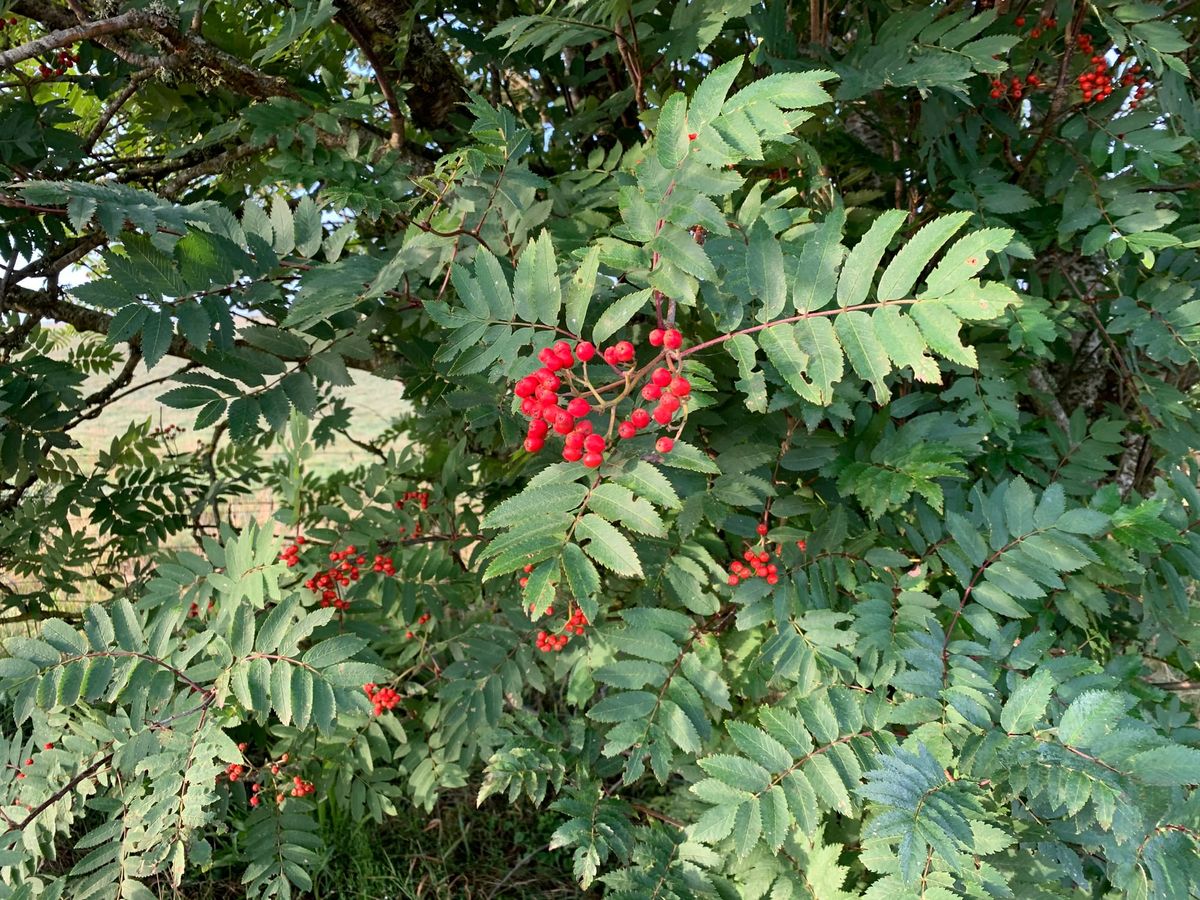
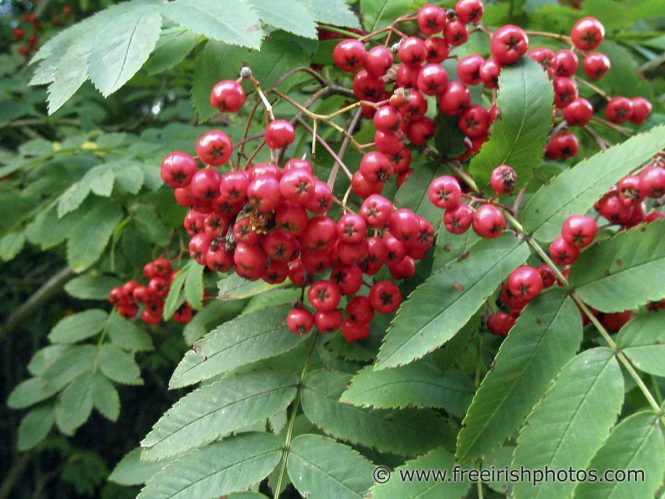
Having a great-niece called Rowan introduced me to the name several years ago, and for a long time Rowan belonged to a person before I met the tree. I thought it was a beautiful name but, if I’m honest, I wouldn’t have recognised a rowan tree if I’d walked straight past one. I had even photographed a rowan dressed in a spectacular red berry gown in 2021, but I still hadn’t known what it was.
After we moved to Netherbrae, neighbours mentioned that there was an elder tree somewhere in the garden. I set off to find it. Eventually, I came across a tree covered in creamy white blossom by the back gate. I thought I had found what I was looking for, but something didn’t quite feel right, and it made me take a second look.
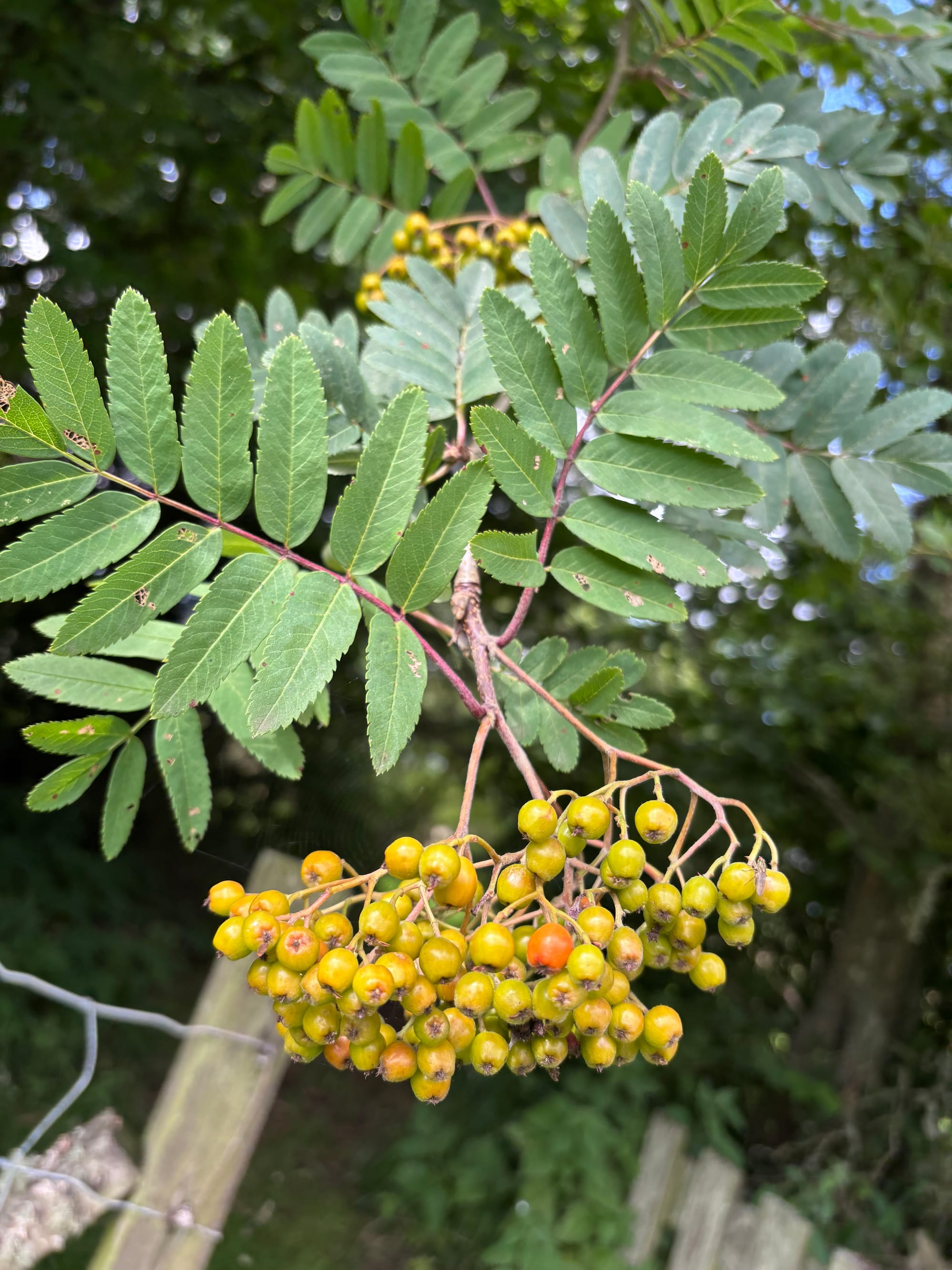
The blossom resembled elder, but the flowers seemed more domed. Elderflowers always make me think of an open hand held up to the sky. These looked different, and they didn’t have the gloriously fruity, summery fragrance of elder. The leaves were different too, more evenly paired.
I stood there for a while, thinking, “I don’t think you are who I think you are.”
My plant identification app suggested rowan. Then came the books, other sources and a good deal more looking. I’d gone in search of elder and arrived having met rowan instead.
I’m discovering that learning plants isn’t really about memorising Latin names. For me, It’s more about learning to notice. The smallest detail can turn out to be the beginning of an entirely new relationship.
I hope that creating a physic garden teaches me, in many more ways, that meeting a plant and knowing a plant are two very different things.
A Trusted Tree
Rowan seems to be one of those trees that carries a surprising amount of history. Maybe I’m not so surprised. I’m discovering rich histories with most of the plants that I look at in any depth.
Across Scotland, Ireland and much of Northern Europe, rowan appears to have long been associated with protection. Rowan trees were planted by entrances, gateways and front doors, and near the doorways of barns filled with livestock. Small crosses made from rowan twigs and tied with red thread were traditionally hung above byres or doorways to protect cattle and households from misfortune, witchcraft or evil spirits.
This rowan is by the garden gate, at an entrance. Maybe it was deliberately planted there for such a reason?
Whether we believe those stories today, about the protective qualities of rowan, isn’t really the point. What intrigues me is that generations of people trusted this tree enough to weave it into their everyday lives. It’s one thing to admire rowan, and quite something else to live alongside it.
Rowan in the Kitchen
People have long found practical uses for rowan, it seems. The berries were gathered in autumn and transformed into jellies to accompany game, and made into preserves, wines and syrups.
The berries aren’t eaten straight from the tree because they are extremely bitter. Traditional recipes often recommend waiting until after the first frost or freezing the berries before cooking them. Freezing is said to help break down some of the compounds responsible for that bitterness and improve the flavour. There are similarities here with the bletting process for medlars, although for slightly different reasons.
That little piece of practical knowledge is fun, isn’t it? A berry that asks you to wait.
The berries are also naturally rich in vitamin C and antioxidants, which might help to explain why they were valued for generations, long before anyone knew about vitamin C.
Medicine, Folklore and Ordinary Life
Like many plants, rowan appears in old herbals and traditional medicine as well as in folklore. Communities used different parts of the tree for digestive complaints, sore throats, fevers, rheumatism and other everyday ailments. Some preparations were valued as mild diuretics or laxatives. If nothing else, it’s reassuring, and amusing, to know that even the most magical trees occasionally have rather down to earth jobs.
In stories from Norse mythology, I read that the rowan tree, or more specifically, a branch of it, saved Thor from drowning in a fast running river.
Other cultures tell equally intriguing stories. Some speak of people coming from rowan or wood itself, while others tell of babies being found beneath gooseberry bushes or first people emerging from rhubarb patches or blackcurrant bushes. I find myself wondering whether these plants held particular importance within those cultures, or whether they were simply familiar companions in everyday life.
I’m sharing these stories because they help us understand how people experienced rowan, not because I’m suggesting anyone tries making a laxative at home. To me, they are part of the cultural history of the tree. They remind us that people once turned to the landscape not only for food, but also for comfort, protection, healing and practical help with the ordinary inconveniences of being human.
Now, it can seem strange that the same tree might be thought to protect a cowshed from witches while also helping with constipation. Historically, those ideas didn’t necessarily sit in separate boxes. Rowan seems to have been a familiar and trusted companion.
Beginning a Relationship
One thing that the project of creating a physic garden is teaching me is that identifying a plant is only the beginning. Next comes learning which parts people have used, how they prepared them, which wildlife depends upon them and how they fit into history. How sustainable the harvesting of a plant is feels like something that I should always look into and, maybe most importantly, spending enough time with plants that they begin to feel familiar.
At the moment, rowan and I have only just been introduced. I’ve admired her blossom, learned to recognise her leaves, read some of the folklore and discovered a little of her history, but I haven’t yet picked the berries. I haven’t spent an afternoon freezing them, removing the stalks, simmering them, straining them through muslin and wondering whether several hours of work really does produce a jelly worth waiting for. That part belongs to autumn.
Some of the pleasure, I think, is allowing curiosity to unfold at the pace of the seasons. Every plant seems to have another story waiting just around the corner. Anyone who knows me will tell you that I’m going to benefit from this slow unfolding, as patience is not my strongest point, but I am paradoxically very much in the long game when it comes to processing patterns.
So, when the rowan berries ripen later this year, I’ll report back. I’ll let you know whether all that careful picking, freezing, simmering and straining produces a jelly worthy of centuries of tradition, or whether it turns out to be a gloriously ridiculous way to spend an afternoon.
Further Reading
- Rowanberry Recipes Forager Chef. Accessed 21 July 2026.
- Rowan Scottish Wildlife Trust. Accessed 21 July 2026.
- Rowan Tree2MyDoor. Accessed 21 July 2026.
- Orton Academy Accessed 29 July 26
 solsdottir