How Can I Own a Tree?

I made a video for my little corner of the Gardenstead app last week, asking, “How can I own a tree?” I find it awe-inspiring that so many of the trees here are older than I am and will most likely still be here long after I am gone. Legally, I understand that they are on my land and therefore, mine. But standing beneath or beside them, that word feels entirely inadequate.
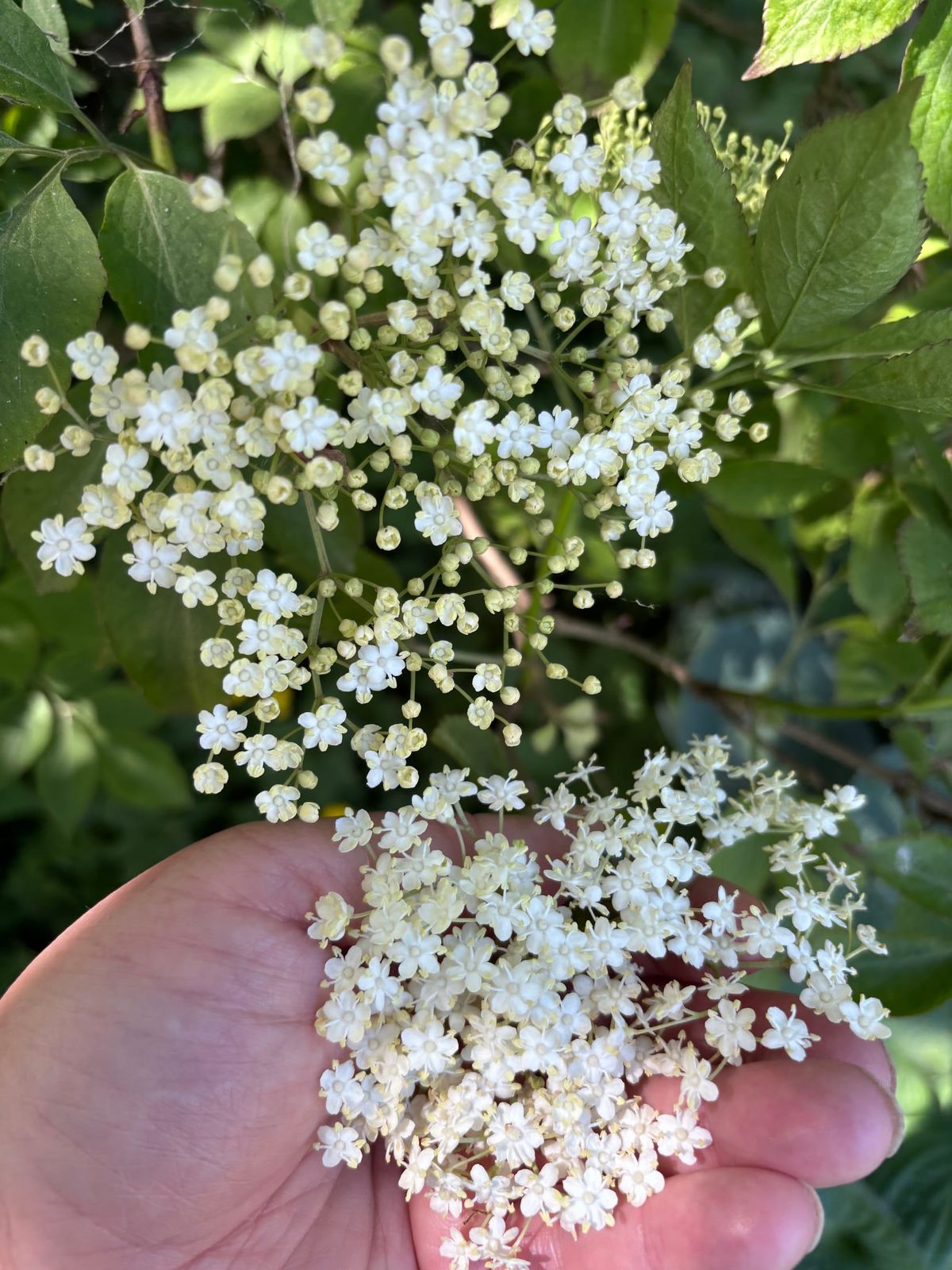
The elder trees are flowering heavily this year. A few weeks ago, one of my neighbours told me about the gardener who lived here before us. He seemed to have had strong views about the elder trees.
“If you’re going to take flowers or berries, or cut the tree,” he told her, “you must ask permission first.”
The idea was curious to me. I wasn’t planning to cut the trees down. I adore elderflowers. Over the years I’ve made syrups, cordials, puddings, cakes, fritters and jams. I have spent many happy hours gathering blossom and later returning for the berries.
It had never once occurred to me to ask permission. Thank the tree perhaps, admire it certainly. Ask permission? I’d never thought of that.
The conversation intrigued me. I found myself standing beside the enormous elder by the wild garlic patch, looking up through the blossom and wondering what he meant.
Did he literally believe that the tree needed to be asked? Was it folklore carried from earlier generations? A habit inherited from somebody else? Or was it a way of remembering that gathering is a relationship rather than simply an act of taking?
I vaguely remembered reading that people once kept elder trees close to their homes for medicinal purposes. I had heard ideas about trees favouring their own offspring and sharing resources through underground fungal networks. Beyond that, I didn’t really know.
How long had people been cooking with elderflowers? What medicines had they made from the flowers, berries and bark? What had the wood been used for? Why had so many stories amassed around this tree? And why did they remain in conversation today?
Before long I was disappearing down a tangled path of folklore, recipes, remedies, beliefs and contradictions. The elder seemed to sit deliciously between food and medicine, knowledge and superstition, everyday use and something magical.
The deeper I delved, the less certain I became about where folklore began and ended. A witch’s tree, you say? Where did that idea come from?
Filling my boots with stories, I discovered that oral traditions across Britain and Europe carried similar beliefs about elder trees. Sometimes the elder was said to be inhabited by a protective spirit. Sometimes by a witch. In other places, an Elder Mother watched over the tree and took offence if branches were cut without permission. Even the word ‘elder’ invokes a feeling of a kind of wisdom, doesn’t it?
Stories varied from place to place, but the theme remained surprisingly consistent. The elder was not simply a shrub. It was something to be treated with respect. The old gardener’s advice suddenly seemed a little less unusual. I hadn’t found evidence that witches live in elder trees, but I had begun to wonder if asking permission might never have been about superstition. Might it have been about relationship?
A brief, ritual pause before taking something? A reminder that flowers, berries, fuel, medicine or wood did not appear only for human convenience?
I started to wonder if reciprocity was the point. Maybe the gardener’s way of seeing influenced mine. Maybe gratitude changes me. Gratitude might ask me to see the elder as something other than a resource.
It might be that asking permission is not so much about receiving an answer and might be more about remembering that relationship, any relationship, goes both ways.
Maybe that is my own interpretation. I have no way of knowing what the people who first told these stories believed. And that uncertainty was possibly becoming one of the most interesting parts of the journey.
Elder has been useful for a very long time. Recipes appear across centuries. Roman writers recorded medicinal uses and medieval recipes made use of both flowers and berries. Some recipes that I discovered feel modern, such as cheesecakes and fritters, but some are best left in the past, I think. Fish and elderberry custard? I’m not hungry, all of a sudden.
Elderflowers were often infused into wines and cordials. The berries became syrups, preserves and remedies or medicines. Herbalists prescribed different parts of the tree for a surprising range of ailments. Whether all of those remedies worked is another matter altogether, but people through history appeared to value the plant enough to keep returning to it.
Even now, every part of the elder seems to come with advice and a warning. Some parts are edible, others require care. The berries are okay to be cooked but are possibly not so palatable raw. Some medicinal claims have been supported by modern research, others remain in the realm of tradition. The elder seems to resist categorisation at every turn.
Perhaps that is why the stories persisted. The more I read, the more I wondered whether folklore sometimes behaves less as a list of facts and more as a way of carrying value through time.
“Ask permission before taking from the elder.”
Whether somebody believed in witches, spirits or the Elder Mother almost becomes secondary. The instruction itself encourages a particular way of behaving. Stop, notice, acknowledge and take what you need. Be grateful. Care for the tree in return.
Standing by the tree, heavy with blossom and humming with bees, I found that difficult to dismiss. I didn’t suddenly believe that a witch was peering out from the branches, ready to curse me for making elderflower cordial but there is something exciting about a tradition that asks us to enter into relationship with the living world rather than assuming ownership of it.
A few days later I was making elderflower syrup. The kitchen filled with the familiar scent of summer and sticky bowls accumulating around the sink. And, I have to confess, I hesitated for a moment before picking the flowers. I hadn’t been convinced by the folklore but an old gardener I’d never met had given me a different way of seeing a familiar tree.
The elder is still flowering heavily. The bees are still busy. The berries will come in a month or two. I still don’t know whether permission is necessary. But I find myself liking the idea. And asking anyway.
If You Fancy Following the Thread
- Elder folklore and the Elder Mother (Wikipedia accessed 20/6/26)
- Medieval recipes using elderflowers and elderberries (Eat History accessed 20/6/26)
- Historical herbal medicine traditions and potential immune system interactions. (Paloma Health accessed 20/6/26)
- Capitulare de Villis (Wikipedia accessed 20/6/26)
- Woodland ecology and fungal networks (National Geographic on YouTube accessed 20/6/26)
- Writing on human relationships with plants, landscapes and reciprocity (Design in mental health network accessed 20/6/26)
- Plantiness (Oxford University Archive accessed 20/6/26)
- Elderflower Recipes (Wild Walks South West accessed 20/6/26)
- Plant eco dyeing (Petalplum accessed 21/6/26)