Rhubarb Rhubarb

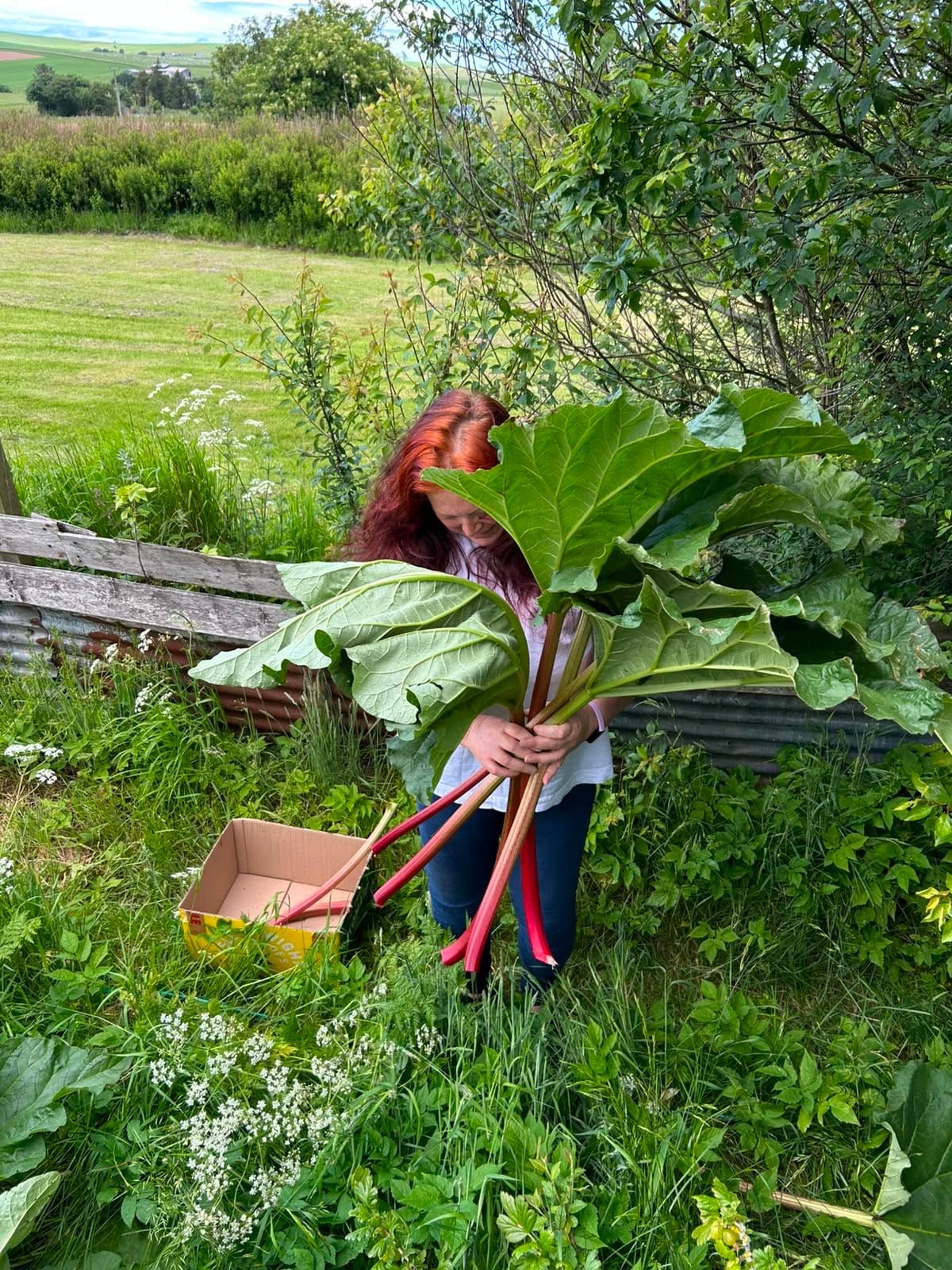
The rhubarb patch was one of the first things my new neighbours warned me about, with amusement. Soon after I moved in, they gathered around me to share a photograph on a phone. The previous year’s rhubarb stood almost five feet tall, towering over the people holding it. It felt less like gardening advice than an introduction to the character of the garden I had inherited.
They weren’t exaggerating. This year I’ve harvested over twenty kilograms from the single patch. There were armfuls of rhubarb, rhubarb and custard ice cream, buns and pies for neighbours, jars of jam, cakes and crumbles. Eventually there was much more than we could use, so I started a little free shop.
At first, I thought I was simply learning how to cook with rhubarb, then, as so often happens, curiosity intervened.
Around the same time, I was following news from the Herculaneum scrolls. After lying unread beneath volcanic ash for almost two thousand years, some are beginning to share their contents with the help of community prizes, modern imaging and AI. One of the texts appears to be a philosophical work exploring abundance. What a coincidence. While scholars were deciphering an ancient discussion of abundance, I was standing in my kitchen wondering what to do with yet another basket full of rhubarb. They were very different kinds of abundance, separated by two thousand years but they met with the same question - what do we do when we have more than enough? In my case, the answer began with sharing, and then, inevitably, with curiosity.
Before long I was tracing rhubarb’s history from ancient medicine to the kitchen table. For centuries, the dried roots travelled along the Silk Road as a valuable medicinal plant. By the eighteenth century, Hannah Glasse published what is thought to be one of the earliest English recipes for rhubarb tarts, reassuring readers that although they might seem “very odd”, they had “a pretty flavour”.
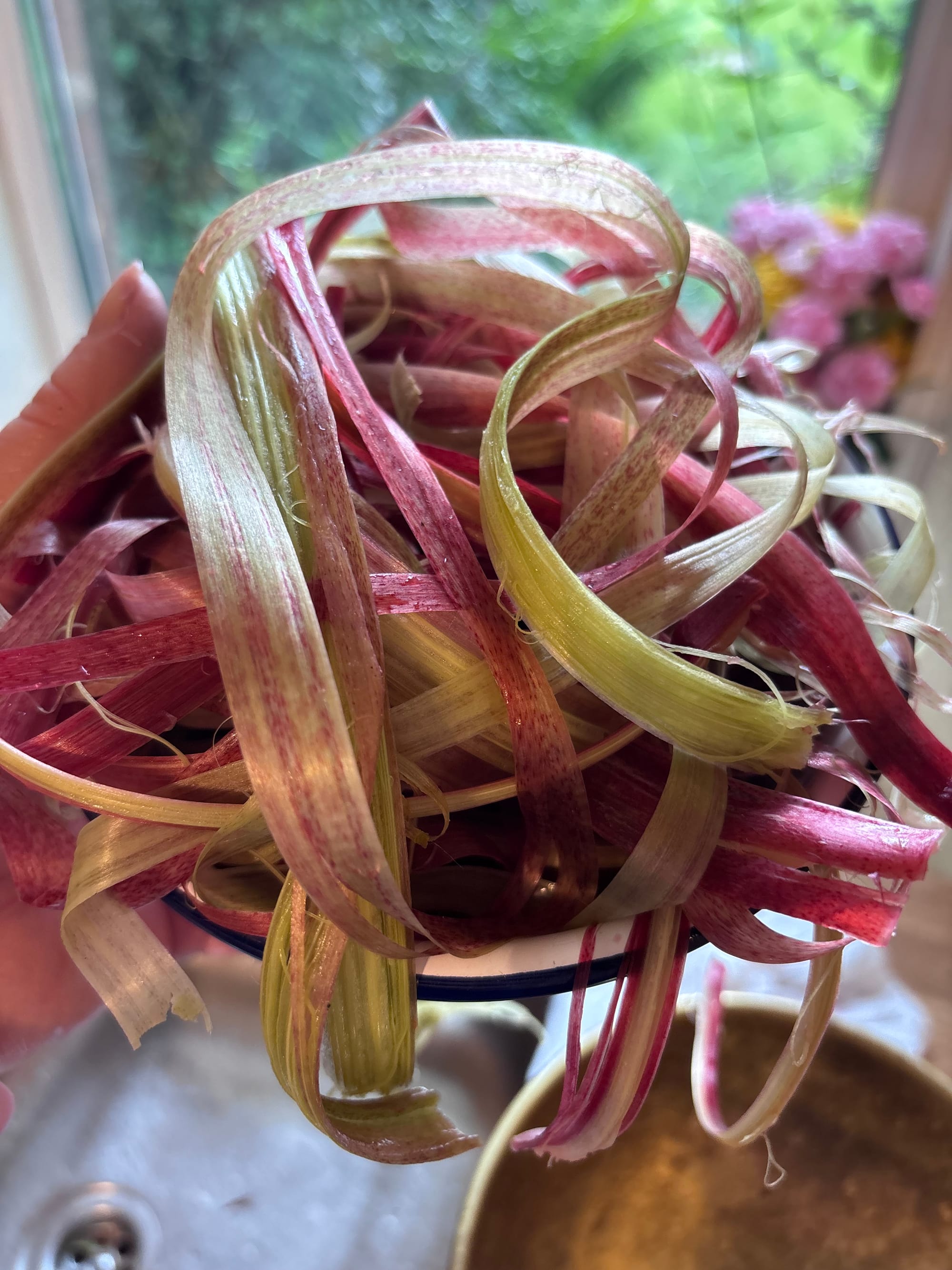
The plant itself refused to stay within the boundaries of food. I’d read that rhubarb skins could be made into cordage. I found myself standing in the kitchen, carefully peeling long ribbons from a handful of stalks. It turned out to be a slower process than I expected. If I peeled too quickly, the skin tore into fine threads instead of useful ribbons. I wanted to experience it for myself.
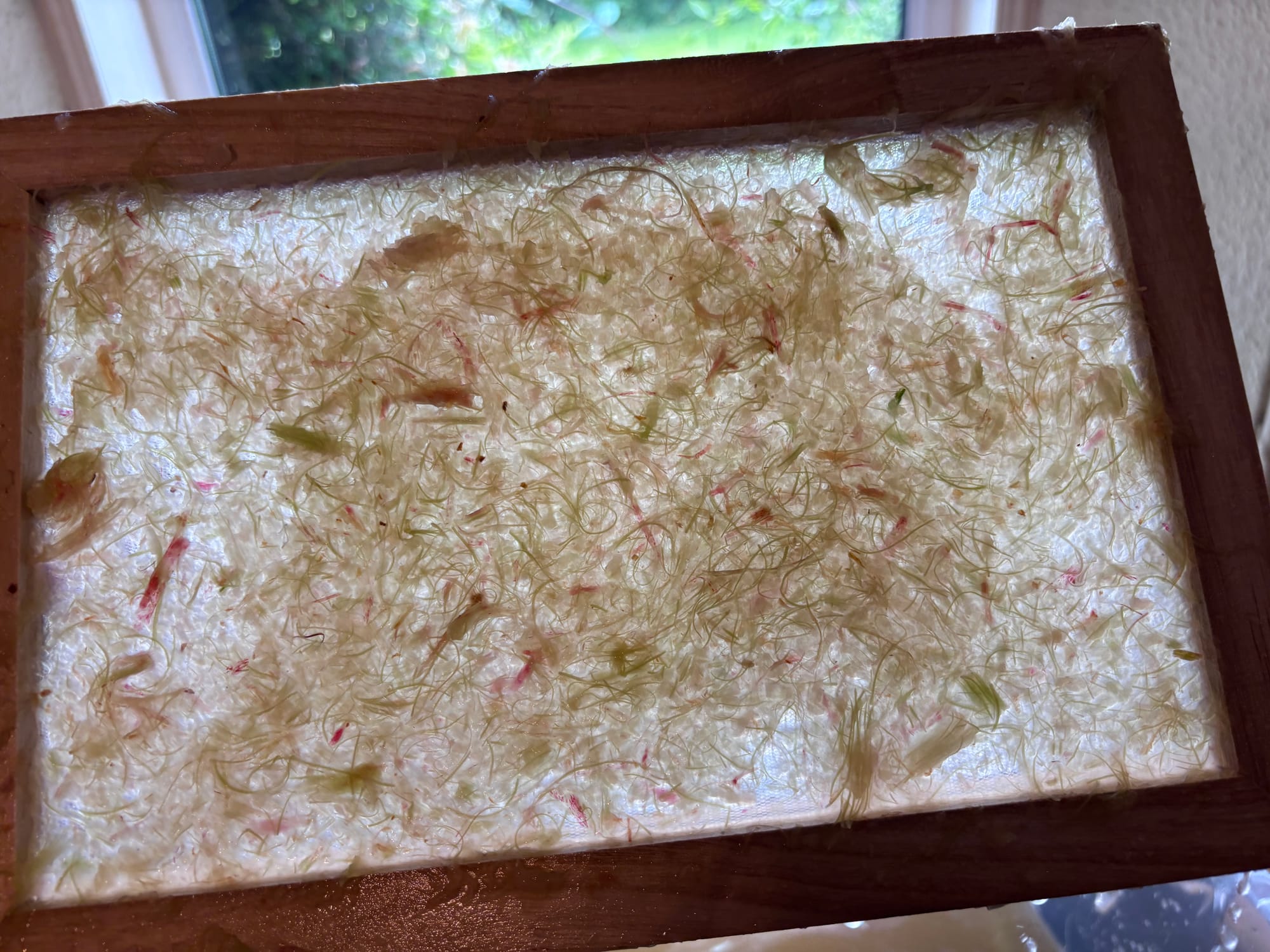
I didn’t want to waste any of the rhubarb, so I decided to have a go at making paper by blending up the offcuts with water and setting the pulp in papermaking frames. Maybe I shall make some lamps.
One of my favourite odd facts is that in the United States, rhubarb was legally classified as a fruit for customs purposes in the 1940s, even though botanically it’s a vegetable. The change reflected how people actually used it in cooking rather than what it is scientifically.
It seems that the roots can produce beautiful yellow dyes too, or pink with an extra processing step. I doubt I’ll be sacrificing any of my thriving crowns just yet, but I like knowing that the possibility is there.
Even the word has a history of its own. Actors once murmured “rhubarb” to imitate the sound of an indistinct crowd, and in 1969 Eric Sykes made an entire comedy in which “rhubarb” is, I think, the only word spoken. My dad has often laughed about that film. Whenever I come across the word rhubarb, I think of him, saying it twice.
Perhaps that is what interests me most. Plants are never just plants. They gather recipes, folklore, craft, history, family memories and unexpected connections. A patch of rhubarb can lead to medieval trade routes, eighteenth-century cookery books, basket making, natural dyes, old comedy films and conversations with neighbours over armfuls of pink and green stalks.
Twenty kilograms of rhubarb has turned out to be far more than one household could eat. It has also been more than enough to sustain an impressive amount of curiosity.
I’ve just put some rhubarb oat bars in the oven. The first time I had these kind of bars, they were made with a date paste filling, by the brilliant Jenny, wife of Lawrence, the Laird of the Isle of Muck (Lawrence has sadly since passed). I was in their fantastic kitchen, complete with Orkney chair, around the fire. As I munched this heavenly date bar, my eyes adjusted to the December low light and I noticed knitting. Socks! I have such a keen interest in yarns, and I started asking about whether it was pure wool, sock wool etc. Jenny is a brilliant and beautifully neat knitter. As soon as I’d wiped my hands, I asked if I could look at the socks and instinctively I put them up to my nose to sniff the yarn of the newly made socks and Jenny kind of gasped and said ‘er - those aren’t new socks, I was mending them for a man on the hunt.’
I was sniffing a stranger’s old socks. Curiosity occasionally comes at a price.
References
- Sarah McDermott Brown & Felicity Vincent, Rhubarb: From Ancient Medicine to a Delicious Culinary Ingredient – history, folklore, Silk Road, medicinal use and the Rhubarb Triangle:
- Orchard Notes – Hannah Glasse’s 1742 rhubarb tart recipe:
- Pontefract Castle Medieval Herb Garden – history of rhubarb
- Evelyn Oldroyd – dyeing with rhubarb root
- Five in the Nest – using rhubarb and white clover for basketry
- Eric Sykes’ Rhubarb (1969): https://www.facebook.com/share/v/1Ce8T9rost/?mibextid=wwXIfr