The Secret Life of Peas

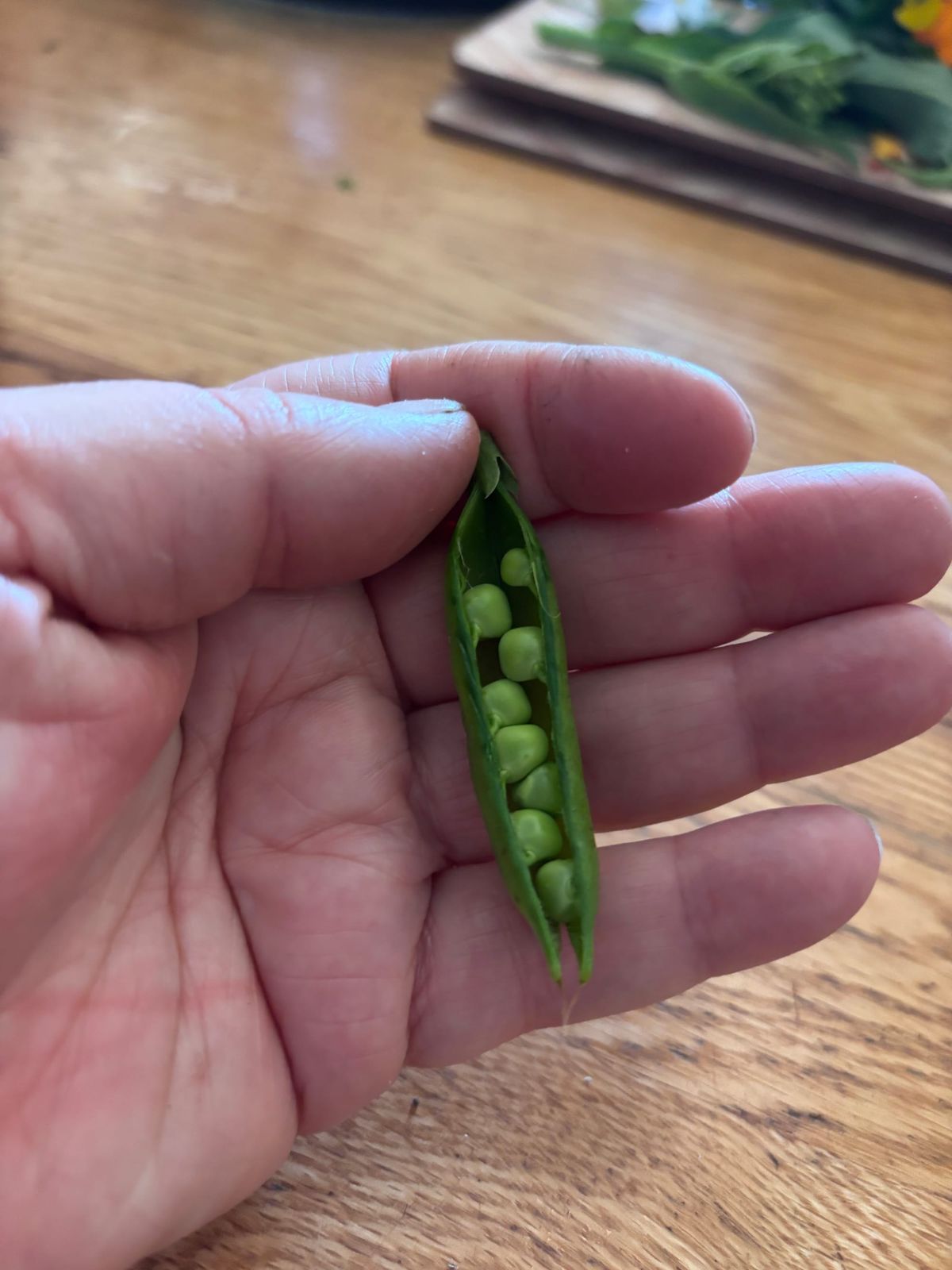
I didn’t intend to grow peas. I thought they might be quite challenging to grow in Aberdeenshire with its wild winds and unpredictable weather patterns. It seemed a shame to waste the peas I’d spent days tending as sprouting seeds, though, when I had to travel. I hurriedly popped them in the no dig vegetable bed we had just set up and forgot about them, leaving them to chance.
I’m glad that I did sow them as they grew brilliantly and survived drought, saturation and the total lack of support framing. Or support of any kind, to be honest.
I didn’t even know at the time whether they would suit growing into podded peas, as I had bought them as sprouting seeds. They did, though, and some of them became my neighbour’s first taste of fresh peas, through the free shop. He described them as tasting like living food.
I’ve cooked some interesting dishes with peas, over many years. Quiches (with goat’s cheese, lettuce, pea and mint), pea pesto, soups, salads, frittatas, hummus, even ice cream! I’ve enjoyed experimenting far beyond peas as a side to fish and chips, although that is an excellent way to enjoy them. Pea shoots look so pretty on a salad or as a garnish. And there are so many varieties from purple mangetout, which grew surprisingly well in this Aberdeenshire garden, to mushy peas and pea fritters. Some are best eaten young in their pods, some as podded peas, some are best left to dry and store, with some of them really good for sprouting. Medieval kitchens offered pease pudding, which gave rise to the rhyme:
Pease pudding hot, Pease pudding cold, Pease pudding in the pot, Nine days old.
Peas haven’t let me down with folklore, either. I didn’t imagine peas to hold any mystical or magical stories. They seem so ordinary and dependable, don’t they? I remember sniggering at the Spitting Image depiction of John Major saying to Norma ‘the peas are good today, dear’, in the most uneventful, dull, domestic scene imaginable. Peas lead ordinary lives, don’t they? They are inexpensive, abundant, fairly easy to grow and not particularly exotic.
I remember podding peas with my grandmother as a child, tasting the peas my Dad grew, and then later when I cared for my grandmother at home, leaving her with a bowl of peas from the farm shop, and she sat happily podding them in the afternoon, maybe remembering doing this as a child, herself. An image and task of ordinary domestic life.
And yet the humble pea was part of a well loved fairy tale when I was growing up, in the story by Hans Christian Andersen, The Princess and the Pea. A story as well loved today as it was in 1835, when it was published.
The pea holds mystery, being a plant so ancient that nobody really knows where it came from. We do know that remains of peas were discovered in Neolithic villages from 10,000 years ago. I remember studying Mendel’s peas in biology class, when I was thirteen. I was bored by them at the time but now I’m fascinated.
Norse and Chinese legends intertwine peas with stories of emperors and dragons, gods and dwarves. In West Sussex, near where I grew up, finding a pod with nine peas in it was supposed to be lucky. Similarly with one single pea in a pod. And apparently, it was once believed that a pea could rid you of a troublesome wart! Thankfully, I have no need to try that one.
Maybe that is the secret life of peas. They appear so ordinary that we overlook them completely. Yet beneath the soil they are feeding bacteria, enriching the earth and exchanging chemical messages with their neighbours. They have helped unlock the science of inheritance, sustained people through centuries of lean winters and continue to surprise researchers who are still discovering how plants sense the world around them.
National Geographic on peas accessed 2/8/26
Pea Recipes Delicious accessed 3/8/26
Nine peas for luck Khkeeler blogspot accessed 4/8/26
Pea folklore Best of British magazine accessed 4/8/26
Plant intelligence Facebook accessed 4/8/26