Under the Gooseberry Bush

The gooseberry bushes came with the cottage. There are about twenty five of them lining the fenced off section of the garden with their threatening thorns and generous intentions. First, I saw fruit, lots of fruit. More fruit than two people could possibly eat. Then, predictably, curiosity entered the chat.
Thinking back, I realise I have almost never acquired gooseberries in the conventional sense. I don’t remember buying them from supermarkets. I remember colleagues arriving at work carrying old ice cream tubs filled with gooseberries because they had far too many.
I remember strawberry picking as a child, noticing that the farm also grew gooseberries. I may have picked a few once or twice, but strawberries always seemed the greater prize. Perhaps it was the sharpness. I wonder whether gooseberries are a fruit we grow into. Their tartness seems to ask for a little patience, whether in the fruit itself or in the person eating it. Maybe that is true of more than fruit. Looking around this old cottage garden, I sometimes think I had to grow into it too.
I also remember my grandmother joking that she had found me under a gooseberry bush. Years later, I discovered she was repeating a much older piece of folklore rather than inventing it herself. Across Britain and parts of Europe, children were told that babies were found beneath gooseberry bushes, sparing adults awkward explanations for a little while longer.
Growing up, we often visited the Isle of Wight and I took my children often, while living around Portsmouth. I was happy when I discovered it had its own gooseberry folklore. Children there were warned about the Gooseberry Wife, a huge hairy creature said to lurk amongst the bushes, ready to catch anyone stealing the fruit. Looking at the impressive thorns on my own bushes, I have to admit that she chose her hiding place well.
Gooseberries seem to have found their way into our language as well as our gardens. As a teenager, I remember asking a friend if she wanted to come out with me and a boy I liked. She laughed and said she didn’t want to “play gooseberry”. I wasn’t entirely sure where the phrase came from, but I understood exactly what she meant. She would have felt like a spare part.
Before long, I began tracing gooseberries through history. Unlike some fruits, they seem to belong far from grandeur or great estates, in cottages, allotments and ordinary gardens. By the eighteenth and nineteenth centuries they were being cultivated by working people, who held competitions to grow surprisingly large berries. Somehow that feels entirely fitting.
Living in a Victorian country cottage, gooseberries seem to make perfect sense. The bushes have probably been around far longer than I have. Someone planted them, pruned them. Someone picked them every summer. Now, unexpectedly, it is my turn.
I find myself thinking that inheritance is an odd thing. We often imagine inheriting as receiving something complete, but inheritance might really be the beginning of another chapter. Along with twenty five gooseberry bushes comes responsibility.
Not to plant more, thank goodness, twenty five is quite enough. But to care for what is already here, to prune them well, to mulch them, to pick the fruit before the birds do (there are plenty of windfalls for them!). To decide what to do with such abundance that arrives whether I have planned for it or not.
Earlier generations might have faced rather urgent decisions. Gooseberries do not wait politely, they spoil. Jam, bottling and preserving will have been necessities rather than hobbies.
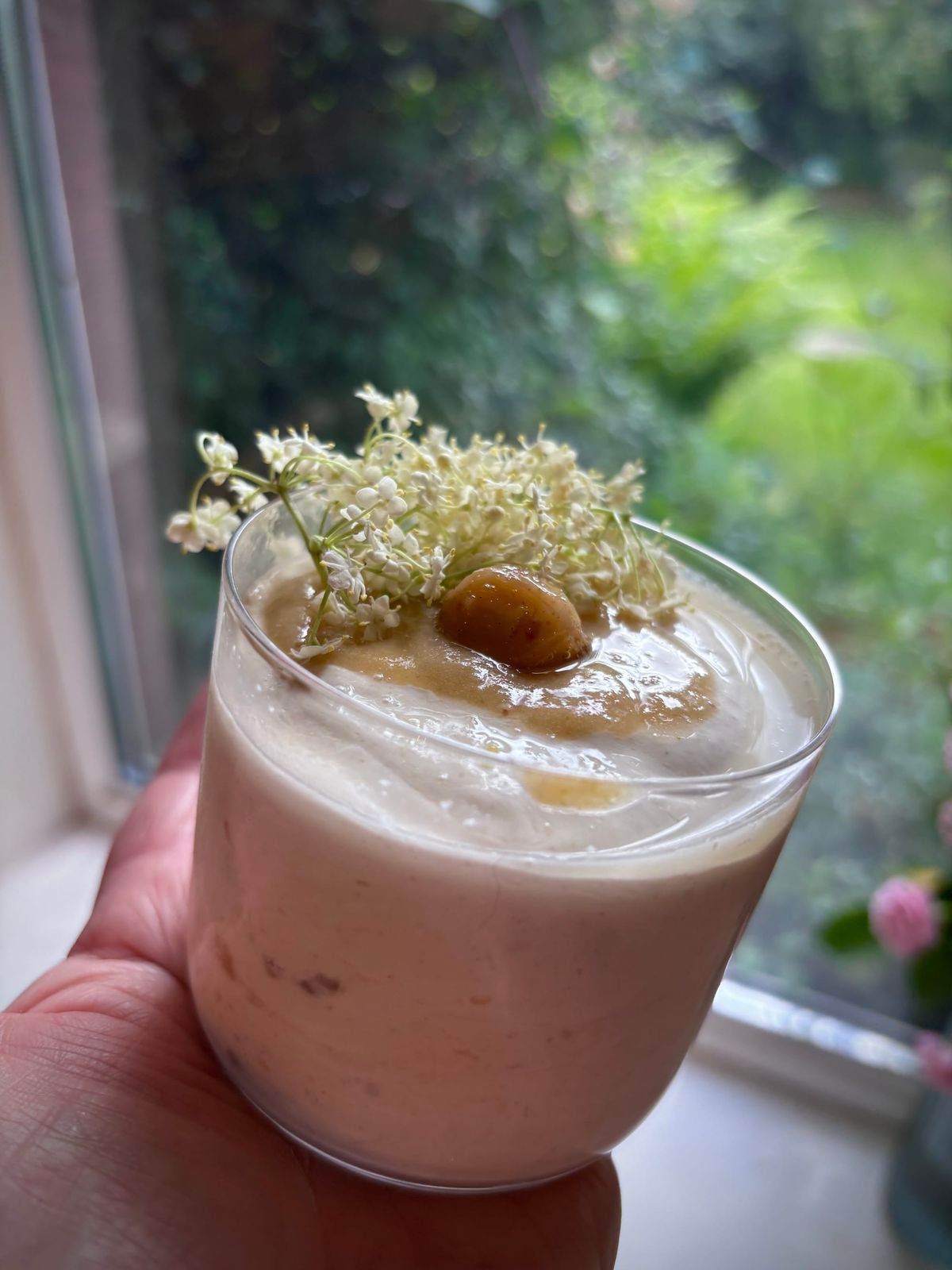
I find myself living in a different moment in history. Three freezers change the conversation. I no longer have to turn every berry into jam before it disappears. Instead, I can preserve potential. Gooseberries can become fruit fool this week, fruit leather next month, an old recipe in winter or an experiment I haven’t even thought of yet. The abundance is not only of fruit but of possibility.
Living here has also made me think differently about wealth. The house itself was not comparatively expensive, and yet I have rarely felt richer.
Curious, I looked up the older meaning of the word wealth. Long before it became so tightly associated with money, it carried the sense of well-being and flourishing. Standing amongst gooseberry bushes heavy with fruit, neighbours who exchange stories and harvests, and a garden revealing itself one season at a time, that older meaning feels surprisingly close.
The bushes offer more than food. (Here I go with a list). They offer history, recioes, folklore, nutrition, experimentation, sharing, responsibility, partnership. Partnership. This word might matter most.
The bushes ask something of me too. They need pruning and mulching. They need someone to notice when a branch is crossing or lichen is taking over, indicating poor air flow. This no longer feels like ownership. It feels more like stewardship, or more fittingly partnership. The previous gardener cared for these bushes. Now it is my turn. One day it will be somebody else’s.
This could be why gooseberries rarely seem to travel alone. They arrive in bowls carried across gardens, in tubs brought into workplaces, in gifts from neighbours with bushes producing far more than one household can use. Gooseberries seem to move through relationships as much as through recipes.
Gooseberries seem to embody the kind of life I find myself growing into. A life of abundance and sharing. Of inherited knowledge alongside new curiosity. And cottage gardens that continue to nourish people decades after they were planted.
Perhaps gooseberries are a fruit we grow into. Or maybe they just wait patiently until we are ready.
Further reading :
British Fairies The Gooseberry Wife
Brown, Sarah McDermott & Vincent, Felicity. Rhubarb: From Ancient Medicine to a Delicious Culinary Ingredient (for comparison with cottage fruits and historical foodways).
The Oxford Companion to Food. Oxford University Press. (On the history, cultivation and culinary use of gooseberries.)
William Turner. A New Herball (1568).(One of the earliest English herbal references to gooseberries.)
Thomas Tusser. Five Hundred Points of Good Husbandry (1573).(Evidence of gooseberries as an established cottage-garden fruit.)
Oxford Botanic Garden & Arboretum – Gooseberry History (Ribes uva-crispa) (History, cultivation and botanical background.)
Royal Horticultural Society – Gooseberries (Cultivation, pruning and care.)
The Folklore Society (Background on British folklore traditions.)
The National Library of Scotland – Scots Language Dictionary (Scottish names or sayings relating to gooseberries.)
Museum of English Rural Life (information on cottage gardens, allotments and working lives.)
Delicious Magazine gooseberry recipes