Vitamin See

On the first day of the free shop, I put out a punnet of blackcurrants and hoped they would find a home. By the evening, they were still there. I felt disappointed for about thirty seconds and then, unexpectedly, I felt relieved.
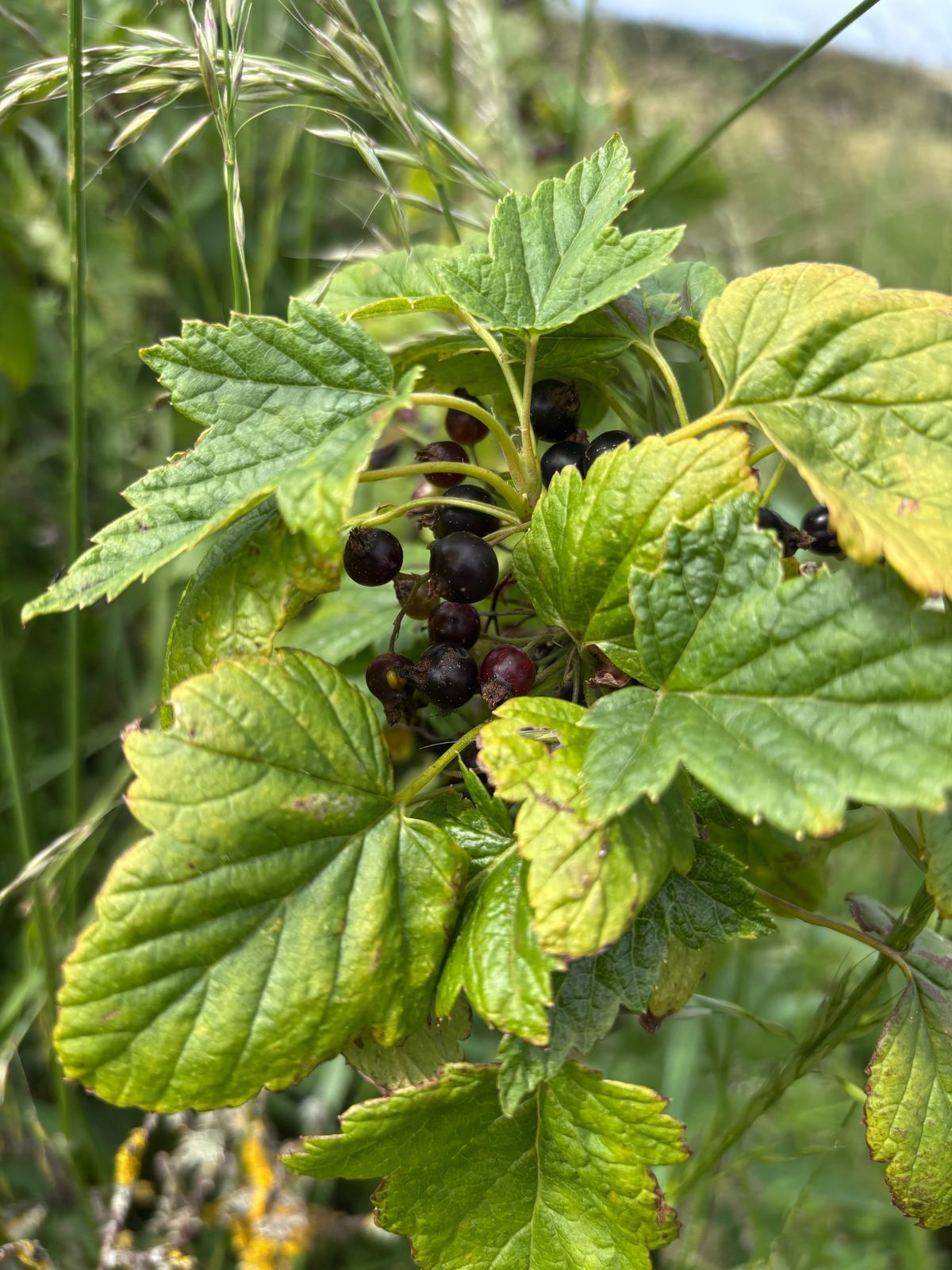
Not because I didn’t want to share them, I absolutely did. But blackcurrants ask something of you. Dave and I picked them in three sessions of around twenty minutes each. An hour of labour between two people. By the end of it, with slightly frayed tempers at the flies, nettle stings, sweat and bleeding scratches, I held two bags, one weighing 125 grams and the other 120.
Two hundred and forty-five grams altogether. Enough for a tart, maybe a small jar of jam. Enough to matter.
By the time we had finished, my hands were scratched and stung. Rain had found its way down my sleeves and into my shoes until they squeaked on the way back across the garden. Squeak, squeak, squeak past the neighbour’s house. They must have wondered what was happening, what needed oiling.
And the blackcurrants were only halfway finished. They still needed topping and tailing and simmering. They still needed sugar and jars and another hour standing over the stove while juice stained everything purple.
Free does not mean free from effort but neither does something bought. The difference is that usually the labour has become invisible by the time food reaches us. How often do we think about the people bent over strawberry plants or blackcurrant bushes for hours at a time so that fruit can arrive in supermarkets looking perfect and effortless? How often do we think about aching backs or wet clothes or hands stung and scratched? How often do we think about who picked them at all?
Maybe this was what the blackcurrants in the free shop offered me, a timely reminder that value and labour rarely sit side by side for very long. By the time food reaches a shelf, the work that brought it there has often disappeared from view.
The berries had not become less valuable because nobody took them home that day. If anything, standing in the rain amongst the bushes taught me exactly how valuable they were. And it might be that we have always known this about blackcurrants.
Wild blackcurrants grow across northern Europe and Asia, but they appear surprisingly late in British gardens and recipe books. Their journey seems to have been from woodland edges and hedgerows into monastery gardens and physic gardens, where they were valued as much for medicine as for food.
Blackcurrants’ first home was often closer to the apothecary than the larder. In some places they were known as quinsy berries or squinsy berries because syrups made from them were given for sore throats and swollen glands. Long before anyone understood vitamin C, it seems that people noticed blackcurrants carrying something useful through winter.
That is possibly why the earliest recipes aren’t recipes at all, they seem to be instructions for syrups and cordials. For preserving and carrying summer into the next season. Even their leaves were valued, dried for teas or used to flavour preserves and pickles with their deep aroma. I put some of the leaves in a net dryer to dry for tea today.
I read that an Iranian legend offers the story that the first humans were born via a blackcurrant bush (although other references say that it was a rhubarb patch) and that French apothecaries in the 1840s sold long life elixirs made from blackcurrants. Cassis, the liqueur made from blackcurrants, was reported to be a cure for melancholy and snakebites. I don’t know about you but if I’d been bitten by a snake, I might be feeling a tad melancholy, so that unusual pairing sounds a bit more plausible, especially if drinking Cassis is the remedy. Medicinal, you know.
Blackcurrants seem to have resisted instant gratification. A raspberry can be understood in a bite. A strawberry can be tasted immediately but blackcurrants ask for another step, another layer of effort and act of transformation. Their value flourishes through labour, into jam and cordial and into the following season.
I have found many references suggesting that blackcurrants were made into jam during World War 2 for nourishing pregnant women and for helping pilots to see in the dark! I always believed that this superpower was reserved for carrots. Similarly during World War 2, I found references to Ribena offering an alternative source of vitamin C to children who could no longer eat imported fruits, and that everyone was encouraged to grow blackcurrants.
Maybe this usefulness and history is why I felt two things at once when the punnet came indoors with me at the end of the day. I had genuinely hoped somebody would take them and I was genuinely grateful that they hadn’t.
Were they unwanted? Were they not worth sharing? I don’t think so, but the fruits of my labours could be tucked into my freezer to make a tart later. The kind of tart that you might find in a French patisserie and more importantly, the kind of tart that you can’t find in a local supermarket.
The following day, messages arrived from local people asking for berries and rhubarb. Enough messages that I began to wonder whether the garden would produce enough to service all of the requests. Maybe value is not fixed. It’s possible that value shifts, depending on who is looking, and when.
One day a punnet sits untouched, another day there is more demand than the garden can meet. The blackcurrants are the same. What changes is the moment, what changes is us.
It’s said that blackcurrants once helped pilots to see in the dark. I don’t know about that, but picking them, preserving them and following their stories has certainly changed the way I see them.
More Folklore Speciality Produce accessed 13/7/26
Blackcurrant legends Indie Lee accessed 13/7/26
Wartime stories BBC accessed 13/7/26
Blackcurrants Congleton Bath House & Physic Garden accessed 14/7/26